Event 1
Overlook Hotel fire and boiler explosion
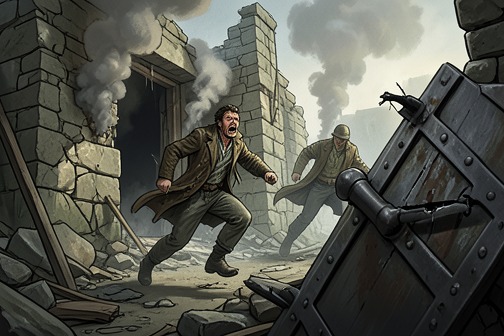
The [Overlook Hotel fire and boiler explosion](entity:event-recall-event-overlook-hotel-fire-and-3835112f2159) turned a mechanical failure at a winter-closed resort into a fatal disaster. The hotel was declared a total loss, its caretaker died trying to avert the explosion, and the surviving Torrances carried its consequences long after they left Colorado.
## Background and Cause
On December 2, during a year when a Georgia peanut farmer occupied the White House, the [Overlook Hotel](entity:location-recall-location-0adbae40bf61) burned to the ground. It was closed for the winter, and only four people were inside. An investigation by the Jicarilla County fire marshal attributed the fire to a defective boiler. Its relief valve was inoperative, allowing steam pressure to rise to a disastrous level.
The caretaker, John Torrance, tried unsuccessfully to release the pressure. The effort was heroic but cost him his life. The explosion’s cause was therefore not left unexplained: the investigation traced the catastrophe to the boiler’s failure, while the caretaker’s attempt to intervene became its human cost.
## The Explosion and Survivors
Three of the four people present survived: the caretaker’s wife, [Wendy Torrance](entity:character-recall-character-7202f5c15127); their young son, Dan Torrance; and the hotel’s chef, [Dick Hallorann](entity:character-recall-character-dick-hallorann-66545e4e2b2e). Wendy and Dick were both badly injured. Dan was physically unhurt, though the account pointedly distinguishes his physical survival from being untouched in every other sense.
Dick had left his seasonal work in Florida and come to check on the Torrances because of what he described as a powerful hunch that the family was in trouble. His arrival meant that he was present when the disaster struck and survived alongside Wendy and Dan. The hotel, by contrast, could not be saved and was ultimately declared a total loss.
## Settlement and Lasting Effects
Wendy and Dan received a settlement from the corporation that owned the hotel. A lawyer advised Wendy that she might obtain considerably more by holding out, since the corporation wanted to avoid a court case. She chose not to pursue that possibility. Like the corporation, she wanted to put the disastrous Colorado winter behind her.
The settlement was modest but supported Wendy through three years in which she could not work. She recovered enough to convalesce, but her back injuries continued to trouble her for the rest of her life. The fire’s aftermath thus extended beyond the immediate loss of the hotel and the caretaker’s death: survival brought an extended recovery and a lasting physical burden.
## Family and Narrative Significance
Wendy and Dan lived for a time in the mid-South before moving to [Tampa](entity:location-recall-location-tampa-2b4275c8cbab). Dick Hallorann sometimes came from Key West to visit, especially to see Dan; the two shared a bond. That continuing connection gives the disaster consequences beyond its immediate aftermath: the catastrophe brought Dick into the Torrances’ lives, and his relationship with Dan endured after the family had left Colorado.
The episode establishes a contrast between outward survival and what remains after it. The hotel is reduced to a total loss, Wendy’s recovery does not erase her lasting pain, and Dan’s being physically unharmed does not mean the winter left him untouched. The fire is both a sudden mechanical disaster and the beginning of consequences that persist in the lives of its survivors.
Event 2
Danny encounters Mrs. Massey in Florida and locks her in the mind lockbox
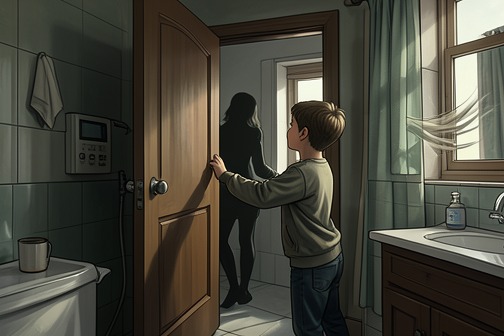
Dan Torrance’s encounters with [Mrs. Massey](entity:character-recall-character-mrs-massey-a1eee3010076) in Florida transform a terrifying haunting into an early lesson in how to resist it. After Dan warns his mother, [Wendy Torrance](entity:character-recall-character-7202f5c15127) seeks help from [Dick Hallorann](entity:character-recall-character-dick-hallorann-66545e4e2b2e); Hallorann teaches Dan to create a mental lockbox, and when Mrs. Massey returns, Dan uses that technique to contain her. The episode connects the dangers Dan associates with the [Overlook Hotel](entity:location-recall-location-0adbae40bf61) to the practical, learned discipline that will let him confront them.
## Background and First Warning
One early morning in March 1981, Wendy Torrance called Dick Hallorann because Dan had awakened her during the night with a warning not to enter the bathroom. The warning followed a frightening encounter: Dan had woken needing to use the toilet while a strong wind blew outside. The wind reminded him of the Overlook Hotel, where the defective boiler had been only the least of the dangers. Florida was warm, but the sound carried the memory of a place whose threats had never been limited to its machinery.
In the bathroom, Dan encountered Mrs. Massey, the woman associated with Room 217. He recognized her as the presence he had expected to find. Rather than stay, he shut the door gently and stepped back. He watched the doorknob turn back and forth before becoming still. His apparent composure did not mean he felt safe: he moved to the kitchen on unsteady legs, climbed onto a chair, and urinated in the sink rather than return to the bathroom.
Dan then woke Wendy and told her that something bad was in the bathroom. Having delivered the warning, he withdrew beneath the covers and wanted to remain there. The sequence makes fear concrete through his actions: he avoids the bathroom, changes where he can relieve himself, and retreats from further conversation. Wendy’s call to Hallorann turns that private alarm into a request for guidance.
## Hallorann’s Lesson
Hallorann presents learning as a gift passed from teacher to pupil. He tells Dan that a teacher gives a present when the pupil is ready, and explains that Dan will place a second, especially important lockbox in his mind. The method is not offered as proof that the haunting is unreal. Instead, Hallorann prepares Dan to meet Mrs. Massey again without being overwhelmed by her presence.
The teaching also has a history: Hallorann says he will explain the method as it was taught to him by [Gramma Rose](entity:character-recall-character-gramma-rose-965c445e70d5). The lesson therefore joins immediate protection to a chain of instruction. Dan is not simply told to endure the fear; he is given a repeatable mental practice and a way to act when the presence returns. The lockbox becomes an inward counterpart to the special lockbox already associated with him, a place in his mind where the threat can be shut away.
## Mrs. Massey Returns
A week later, Mrs. Massey appears again in the bathroom, this time in the bathtub. Dan understands why she is there: it is where she died. The return repeats the earlier setting and threat, but his response has changed. He is not surprised, and he does not run. He enters the bathroom and closes the door behind him while Wendy watches Three’s Company in another room.
Mrs. Massey beckons him forward, smiling. Dan approaches with a smile of his own. That outward calm marks a reversal of the first encounter, when he withdrew and sought safety elsewhere. The evidence does not describe every step of the mental exercise, but its result is clear: at the instant Mrs. Massey understands what Dan intends, she begins to scream. The child who had once needed to warn his mother and hide now controls the terms of the encounter.
## Containment and Significance
Dan hears muffled screaming from deep inside his head, where the twin of his special lockbox has been stored on a special shelf. He does not mind the sound and expects it to stop; it does. Mrs. Massey has been contained rather than allowed to remain an active presence in the bathroom or to dictate Dan’s behavior. The ending does not erase the horror of the earlier encounter, but it establishes that Dan can respond to it with a learned means of defense.
The episode is a compact movement from inherited fear to practiced resistance. The wind links Florida to the Overlook Hotel in Dan’s memory, and the repeated bathroom encounter tests whether the terror will continue to rule him. Hallorann’s instruction changes the second meeting: Dan enters instead of fleeing, and the mental lockbox turns an overwhelming haunting into something he can confine. The result is both immediate protection and an early example of knowledge passing between people who share an understanding of dangers others cannot see.
Event 3
Andy Hallorann’s return after death
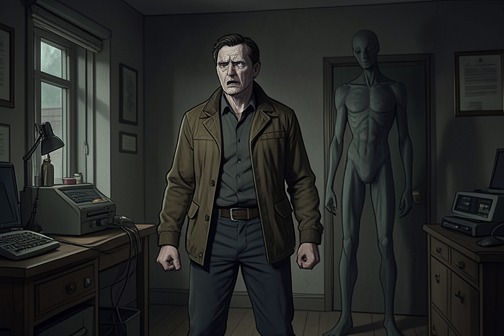
[Andy Hallorann’s return after death](entity:event-recall-event-e71f1987cbf7) transforms [Dick Hallorann](entity:character-recall-character-dick-hallorann-66545e4e2b2e)’s childhood fear of his grandfather into a supernatural encounter that Dick cannot simply outlast. Recounting the events to Danny Torrance, Dick describes Andy’s cruelty while alive, the relief he felt at the funeral, and the shock of finding that death had not ended the danger. The episode also reveals the rule [Gramma Rose](entity:character-recall-character-gramma-rose-965c445e70d5) taught him: an angry spirit can linger by feeding on [the shining](entity:expression-recall-expression-the-shining-9ed9f640e588) of someone who remembers it, so the living must learn how to turn that connection against it.
## The abuse and the funeral
Andy’s power over Dick began in the household and was enforced through small, repeated humiliations. At dinner, he required Dick to finish every part of a heavy meal before he could eat the dessert placed in view beside his plate. If Dick could not finish, Andy took the dessert for himself; even when Dick did finish, Andy might spoil the treat and present the act as a joke. Dick’s parents did not intervene. Dick later explained that they feared Andy, and that their silence left him alone with the old man’s rules.
The abuse was not limited to the dinner table. Andy threatened Dick into silence, and Dick understood that neither the threat nor the adults’ failure to protect him could be overcome by simply telling the truth. Andy also invoked Charlie Manx, a supposedly dangerous man who would take Dick away if he spoke. The invented menace extended Andy’s control beyond the home: it gave Dick another reason to fear that disclosure would make his situation worse.
After Andy died of a stroke, Dick wanted to attend the funeral rather than stay with Gramma Rose. He needed to see for himself that his grandfather was dead. In the rain, beneath black umbrellas, he watched the coffin—Andy’s largest and finest, Dick supposed—lowered into the grave. He remembered the years of cruelty and thought of the threat that Andy could no longer carry out. At the graveside, his father allowed him to look down into the open grave, despite his mother’s effort to pull him back. For Dick, the funeral offered a concrete ending: Andy was underground, and the threat of his taking Dick away had seemingly ended with him.
## The return six months later
That ending lasted six months. One day Dick came home from school and found Andy’s dead body in his bedroom. Dick screamed, then ran out and shut the door. From outside, he heard movement and scratching against the door. He waited until his parents were home before going back in; Andy was gone, but the room bore signs of his return. The incident overturned the certainty Dick had sought at the funeral. Andy’s burial had not prevented him from coming back, and Dick now understood that the old threat had become a presence he could not keep away by ordinary means.
About a week later, Dick saw Andy again in a park, sitting on a swing. The suit he wore was coated with gray matter that Dick believed had grown on it in the coffin. The sight confirmed that the return was not confined to the bedroom or to a single frightening episode. Andy had reappeared in public, and Dick believed he would continue to come back. Dick went to Gramma Rose because he knew he needed help with something beyond the reach of ordinary family protection.
## Gramma Rose’s explanation
Gramma Rose had sensed that something was wrong, but she had not forced Dick to explain. She told him she would listen when he was ready to talk, leaving him control over when to disclose what had happened. When Dick finally needed her help, she explained that Andy was not simply a ghost in the ordinary sense. Through the shining, Dick was making him real again: the spirit was being fed by Dick’s own ability. Gramma Rose compared the process to a mosquito returning for more blood, an image that made the danger understandable without suggesting that Dick had chosen it.
Her teaching changed the meaning of Dick’s connection to Andy. The shining that made the return possible could also be used against the spirit. Gramma Rose presented that knowledge as a gift from teacher to pupil, and as something Dick could receive when he was ready. Rather than leaving him with the conclusion that the dead were invulnerable, she gave him a way to understand the mechanism sustaining Andy’s presence and to respond to it deliberately.
## The story Dick passes on
Dick tells the story to Danny during their walk back to the parking lot, where Dick is winded and pauses to speak. Danny recognizes the shape of the return before Dick finishes describing it: Andy has come back from the dead. Their exchange makes clear that Danny’s own experience with the dead helps him understand the account, while Dick’s recollection gives the supernatural encounter a personal history. Dick does not tell the story as an abstract lesson; he explains why he sought Gramma Rose and how her explanation became part of his knowledge.
The episode therefore joins two kinds of inheritance. Andy leaves Dick a history of fear and a spirit sustained by memory; Gramma Rose offers a different inheritance, practical knowledge that turns the shining from an involuntary vulnerability into a means of resistance. Dick’s account prepares Danny to understand that contact with the dead can involve more than seeing them: a person’s own power may help keep a spirit present. The return after the funeral is frightening because it breaks the ordinary promise of burial, but Gramma Rose’s teaching prevents that break from being the final word.
Event 4
Dan Torrance encounters Deenie and Tommy in Wilmington
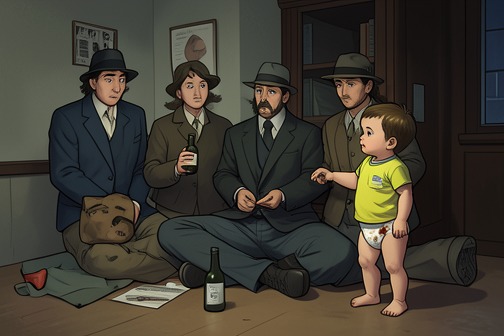
[Dan Torrance encounters Deenie and Tommy in Wilmington](entity:event-recall-event-93824e47f489) during a period when alcohol still governs his choices. The scene turns on a sharp contradiction: Dan recognizes that a small child is vulnerable and in immediate danger, yet his effort to protect him stops short of taking responsibility. He leaves the apartment with money from [Deenie](entity:character-recall-character-deenie-d43d4f623e59)’s purse, and the memory of [Tommy](entity:character-recall-character-tommy-6e67d140947b) becomes one of the wounds he carries into the years before recovery.
## Circumstances
Dan wakes in a bare apartment after a night of drinking, suffering a severe hangover and remembering fragments of disturbing dreams. Deenie is asleep nearby. As Dan tries to orient himself, he discovers a toddler standing in the room. Tommy is around eighteen months old, wearing an Atlanta Braves shirt, and his diaper is visibly soiled. The child’s presence abruptly changes the scene from Dan’s private morning-after misery to a question of whether anyone is looking after him.
The apartment offers Dan reasons to suspect that Tommy has been left alone while Deenie went out. Cocaine lies on the coffee table, and Tommy moves toward it, calling it candy. When Dan lifts the child away, he sees bruises on his upper arm. He also has a sudden, clear mental image of Deenie’s look-alike in the photograph from her wallet picking Tommy up and shaking him. Later, in the bedroom, Tommy goes straight to his mother and crawls beside her; when his shirt shifts, Dan sees further bruises on his legs. These observations make the child’s exposure to danger more than a matter of an untidy or unsupervised room.
## Dan’s Intervention and Retreat
Dan acts immediately when Tommy reaches toward the cocaine, lifting him away from the table. He takes him into the bedroom and puts him down beside Deenie. The intervention prevents Tommy from reaching the powder, but it does not resolve the larger danger Dan has just recognized. Deenie remains asleep, and Dan does not stay to make sure she wakes or that Tommy will be safe.
For a moment, Dan imagines finding Tommy’s older brother and confronting him over the child’s bruises. The thought is cold and violent, but it remains an impulse rather than an action. Dan also considers contacting child-protection authorities, then dismisses the idea because he is hungover, reeking of alcohol and sick, and believes he would not look like a credible complainant. His reasoning exposes both a genuine awareness of neglect and the way his own condition supplies an excuse to withdraw.
[Wendy Torrance](entity:character-recall-character-7202f5c15127)’s voice enters his thoughts, urging him to put Deenie’s money back. Dan nearly does so: he takes it from his pocket and walks toward her purse. Instead, he notices the cocaine and decides he can take it and sell what remains. He moves the cocaine and a magazine onto the kitchenette counter, beyond Tommy’s reach, and cleans the residue from the coffee table with a scrubbie. That practical care for the child coexists with self-serving calculation. Dan leaves without a note, taking the money and carefully avoiding slamming the door. He tells himself the quiet departure is considerate, but his exit leaves the central problem untouched.
## The Memory’s Return
That night, Dan sleeps outside beside a river with a bottle and food for the next morning. As he settles down, Tommy appears in his thoughts again: the child reaching toward the cocaine, the bruised arm, and his blue eyes. Dan tells himself he will never speak of the encounter. The next morning, however, he remembers Tommy’s eyes, the bruised arm, and the reaching hand. The decision to keep silent has not made the experience disappear.
Dan gathers his possessions and goes north, first to upstate New York and then to Massachusetts. Two years pass. He sometimes helps people, mostly older people, but he continues to drink. On too many drunken nights, Tommy is the last person he thinks about before sleep and the first to return to mind on hungover mornings. When Dan tells himself he is going to quit, the promise is repeatedly postponed—until next week, or next month. Tommy remains the particular memory attached to that promise.
## Significance in Dan’s Arc
The encounter is not a clean act of rescue. Dan does remove Tommy from immediate reach of the cocaine, recognizes signs that the child may have been hurt, and briefly considers intervening more decisively. But he also takes money from the sleeping mother, does not seek outside help, and leaves. The event therefore gives his later guilt a concrete shape: not simply a memory of another bad night, but a recollection of seeing a child in danger and choosing a limited intervention followed by retreat.
Its force comes from recurrence rather than resolution. Dan tries to seal the episode away, yet Tommy’s blue eyes and reaching hand return across the two-year period as he moves north and keeps drinking. The memory does not by itself establish Dan’s recovery, but it becomes a repeated prompt for his intention to stop. In that sense, [Wilmington](entity:location-recall-location-wilmington-0257d8a790fe) marks a difference between forgetting and change: Dan wants to erase the night, while the image of Tommy persists as evidence he can no longer quite put aside.
Event 5
Dan Torrance Asks Casey Kingsley for Help and Begins Recovery
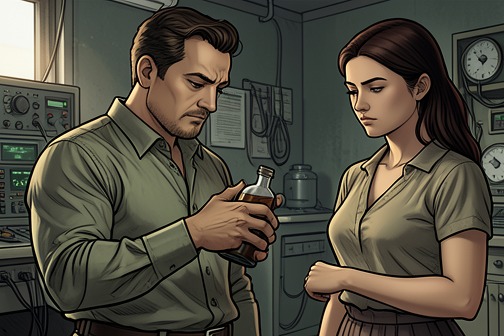
Dan Torrance’s decision to ask [Casey Kingsley](entity:character-recall-character-casey-kingsley-14db1e2199c9) for help begins not with confidence but with a bottle he cannot bring himself to open. Casey takes that bottle from his hand, then gives his desperation a practical answer: a demanding program of meetings, calls, and continued accountability. The choice becomes the start of a recovery that Dan sustains for fifteen years before confronting the secret he had feared might send him back to drinking.
## Crisis and the request for help
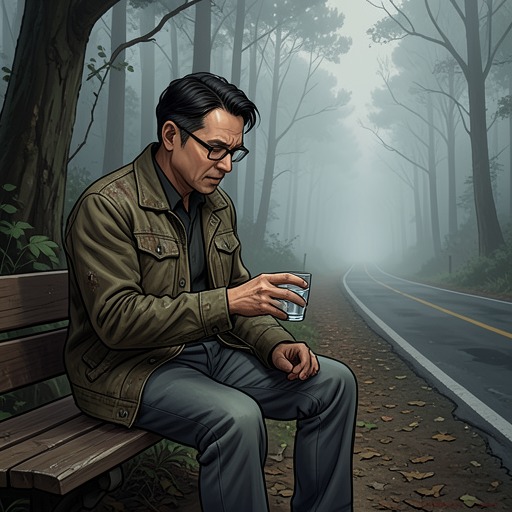
Dan’s immediate crisis gathers around a return to the Red Apple. After buying wine there the previous day, he goes back and takes three bottles rather than two. He sits on a bench in [Teenytown](entity:location-recall-location-teenytown-1bf546f71879) with one bottle in his hand, caught between needing it and seeing it as something dangerous. The thought that drinking would mean the Overlook had won collides with the fear that not drinking would leave him unable to cope. Even the hotel’s destruction has not ended its power over his choices.
The bottle becomes a focus for that unresolved struggle. Dan repeatedly tightens and loosens its cap without drinking. [Wendy Torrance](entity:character-recall-character-7202f5c15127)’s voice brings the question back to the purpose of their escape from the hotel and their effort to make a new life. Her intervention does not erase his distress, but it interrupts the movement toward drinking: Dan keeps holding the bottle rather than opening it.
[Billy Freeman](entity:character-recall-character-billy-freeman-858124369582) finds him after waking with the sense that something is wrong. Dan admits he does not know what else to do. Billy’s response is to take him to Casey Kingsley, recognizing that Dan needs help beyond what a friend can provide in that moment. Casey sees both the bottle and the desperation with which Dan holds it. At last, Dan says that he needs help; when Casey takes the wine, Dan holds on briefly and then lets go. The gesture gives physical form to a first surrender, while Casey’s invitation into the [Frazier](entity:location-recall-location-frazier-580ef5d80d16) Municipal Services office turns that surrender into a next step.
## A structured beginning to recovery
Casey does not leave the request at the level of reassurance. He asks Dan to reckon with whether he is truly tired of being sick and tired, then welcomes him inside to talk. The exchange marks a change in the terms of the crisis: Dan has not solved his dependence, but he has stopped facing it alone and has accepted direction from someone who can give him a program.
The program is deliberately exacting. Casey orders ninety [Alcoholics Anonymous](entity:organization-recall-organization-alcoholics-anony-6880f11c6939) meetings in ninety days and tells Dan to telephone him every morning at seven. At the beginning, he also directs Dan to sit in the front row, treating placement as part of the discipline rather than a matter of preference. Dan’s eighth meeting is a noon gathering in the basement of a Methodist church in Frazier. He sits in the first row while another member speaks, following Casey’s instruction even though the routine is still new to him.
Casey gives Dan a small notebook bearing a picture of waves striking a rocky promontory and a motto about how great things are not created suddenly. Dan understands the point without yet feeling committed to it. That gap matters: recovery begins as a set of actions he agrees to perform before its deeper meaning has fully taken hold. When he completes the ninety consecutive meetings, Casey allows him to stop the daily morning calls. Their contact continues in a different form: they meet for coffee three times a week at the Sunspot Café.
## Practice, memory, and accountability
The routine gives Dan more than a schedule. It keeps him in contact with Casey while making repeated participation, rather than a single dramatic promise, the measure of progress. Casey is both his Alcoholics Anonymous sponsor and, later, his first [New Hampshire](entity:location-recall-location-new-hampshire-5211f8695ec5) employer. Their relationship therefore links recovery to sustained personal support and to Dan’s life in the community, though the evidence does not reduce his sobriety to any one source of help.
Years later, in July 2011, Dan still meets Casey for coffee and waits for what Casey calls the Catechism. Asked why he goes down on his knees, Dan answers that he needs to remember the drink put him there. He calls this the truth. Casey identifies Dan’s answer with the first three steps, and Dan gives their short form: he cannot do it alone, a Higher Power can, and he will turn the matter over to that power as he understands it. The importance of this exchange lies in its return to memory. [Sobriety](entity:state-recall-state-sobriety-36a49f86bc5b) does not depend on pretending the past did not happen; Dan treats remembrance of where drinking brought him as part of the practice that keeps him sober.
The structure also places Dan within a community of people who continue to struggle. At a Saturday noon meeting marking his fifteenth year, members share stories of addiction, family hardship, and the consequences of drinking. The meeting is an established Frazier gathering, founded in 1946, and is full for Dan’s anniversary. His growing reputation for work at the local hospice has given him the nickname Doc, which he finds ironic but welcome. The name suggests a return to care and usefulness without making him a literal physician or erasing his history.
## The fifteenth anniversary and the secret
At the anniversary meeting, Casey presents Dan with his fifteen-year medallion. Dan’s fingers are cold, and he fears the medallion may slip; Casey closes Dan’s hand around it and embraces him. The award records time, but the moment also makes their connection visible: the sponsor who first intervened at the bottle is still present at the milestone. Casey congratulates him on another year, framing the achievement not as a final arrival but as a commitment renewed.
Dan then speaks about a conversation with Casey from a couple of years earlier. Casey had asked whether Dan had completed the Fifth Step—admitting the exact nature of his wrongs to God, himself, and another person. Dan had answered that he had done most of it. Casey believed there was one wrong Dan could not get past because he was too ashamed to discuss it, and warned that keeping it secret might eventually leave him with a drink in his hand. The account identifies the burden and its danger without specifying the wrong itself.
Speaking before roughly nine dozen members, Dan distinguishes this disclosure from the courage required to face the True Knot: this is not a heroic confrontation but an admission of his own wrongdoing. His initial embarrassment gives way to the discovery that the listeners are neither revolted nor astonished; some have known worse, and some have done worse. The group’s response makes room for confession without turning it into absolution or spectacle. When an oldtimer asks how he managed sobriety, Dan gives the meeting’s familiar answer: one day at a time.
## Narrative significance
The event’s arc depends on duration. Its first decisive action is modest and immediate: Dan says he needs help, and lets Casey take the bottle. The later anniversary scene shows what that request has opened into—regular meetings, calls, a sponsor relationship, the discipline of remembering, and eventually a public admission of what shame had kept unspoken. The medallion marks fifteen years, but Dan’s account insists that the work still proceeds one day at a time.
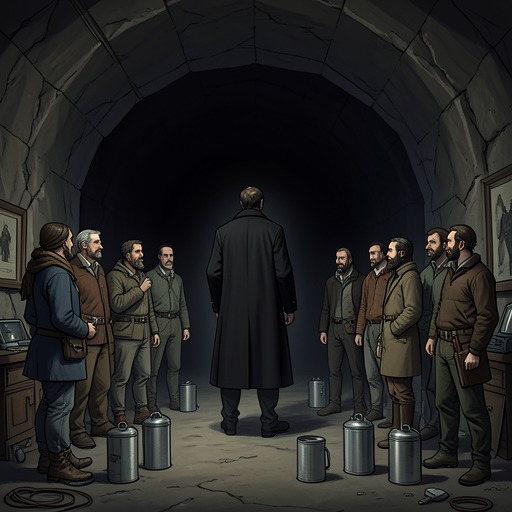
The surrounding narrative also places this mutual practice beside the True Knot’s gatherings. The group assembles around a canister and shares what it calls nourishment, gaining renewed vigor from another person’s essence. The contrast is not simply between a community that gathers and one that does not: both use ritual and repeated language to bind members together. Dan’s recovery, however, is organized around seeking help, acknowledging harm, and telling the truth, while the True Knot’s survival depends on taking from others. Set against that predatory collective, the meetings that sustain Dan offer a different model of endurance—one built through accountability and shared support rather than consumption.
Event 6
September 11 attacks
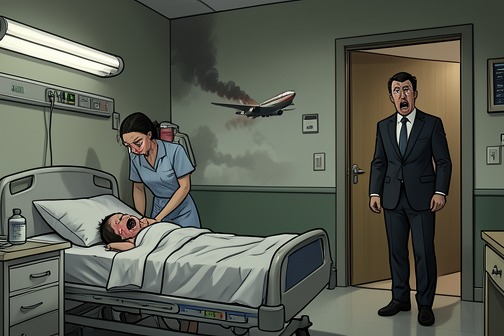
The [September 11 attacks](entity:event-recall-event-386102a65454) are presented through two sharply contrasting forms of witness: a family caught in the immediate shock of the news and the True Knot watching the tragedy for its own benefit. At a hospital, the attacks coincide with a startling change in infant Abra Stone; beside the river, the group turns public mourning into an opportunity to feed. The event’s consequences extend beyond that day, shaping both the family’s understanding of Abra and the True Knot’s increasingly cautious methods of survival.
## News at the Hospital
[David Stone](entity:character-recall-character-david-stone-f031300ed374) first becomes consciously aware of the commotion outside when the hospital door is open. People speak loudly, some cry, and the nurse who admitted the family passes with a red, blotchy face and wet cheeks. Her distress registers against the sound of the screaming infant, Abra, but she does not look toward the child. [John Dalton](entity:character-recall-character-john-dalton-8f339fefeb9d) arrives after receiving a message and tells David that a passenger jet has hit the [World Trade Center](entity:location-recall-location-world-trade-center-4aee445e06aa) and that no one believes it was an accident.
The narration then fixes the news to a precise sequence. American Airlines Flight 11 was the aircraft that struck the Trade Center; at 9:03 a.m., United Airlines Flight 175 hit the South Tower. At that same minute, Abra abruptly stops crying. By 9:04, she is asleep. The brief interval makes the change difficult to treat as an ordinary settling of an infant: the story places it directly beside the second impact, without explaining it away or turning it into a spoken revelation. In the hospital’s atmosphere of confusion and grief, Abra’s sudden quiet is an uncanny counterpoint to the public disaster.
## Shock Carried Home
On the drive back to [Anniston](entity:location-recall-location-289fc0d62743), David and [Lucy Stone](entity:character-recall-character-a16ed8c66dc9) listen to the radio while Abra sleeps peacefully in her car seat. The news remains unbearable, yet turning it off feels impossible. David finally silences the broadcast after the announcer lists the airlines and flight numbers: two aircraft in New York, one near Washington, and one that has crashed in rural Pennsylvania. The accumulation of names and locations gives the catastrophe a scale that the first report at the hospital could not yet convey.
David begins to tell Lucy that he had a dream. She stops him: she knows, because she had one too. Their shared, unfinished recognition adds another layer to the scene. Neither needs to recount the dream for the exchange to register as significant; the event has already connected their private foreknowledge to the news unfolding around them. The radio’s detailed account makes the disaster publicly legible, while their terse exchange leaves its personal and psychic meaning partly unstated.
## The True Knot as Spectators
The True Knot watches the attacks from a parking lot, passing around four pairs of binoculars. They could have had a better view from [Sinatra Park](entity:location-recall-location-sinatra-park-d3a95c417fa4), but [Rose the Hat](entity:character-recall-character-rose-the-hat-b60da949127a) avoids taking the group there early, when their presence might attract suspicion. Her caution anticipates the more watchful climate that will follow the attacks: the country is becoming a place where people are urged to report anything suspicious, and an itinerant group must avoid drawing notice.
Around ten in the morning, once crowds have gathered along the riverbank, the True Knot moves to the park. The scene exposes how easily the group can blend into a public gathering. The park is packed; most people are silent, though some weep. Apron Annie and Black-Eyed Sue can cry on demand, while the others arrange their faces into expressions of sorrow, solemnity, or amazement. Their performance is not simply a disguise imposed on an otherwise separate scene: it lets them occupy the same space as ordinary mourners without revealing what they have come to take.
The group stays for most of the day, standing at the iron rail and watching without speaking among themselves. They breathe slowly and deeply, like visitors taking in sea air. Rose removes her top hat and holds it at her side as a sign of respect. The gesture resembles mourning, but the group’s quiet, sustained breathing gives the vigil another purpose. At four o’clock they return to their encampment, invigorated. They plan to come back the next day, and the days after that, remaining until the good steam is exhausted and then moving on. The attacks thus become, for the True Knot, not only a public tragedy to observe but a prolonged source of nourishment.
## Aftermath and Concealment
The account of the vigil links the group’s feeding to a visible change in [Grampa Flick](entity:character-recall-character-grampa-flick-519c98ad2a01). When the True Knot first gathers at the park, Pea and Pod push him in a wheelchair; his veteran’s cap and shifting claims about which war he served in reflect the group’s cultivated ability to pass within ordinary public life. After the days of feeding, his long, baby-fine white hair has become iron gray, and he no longer needs the wheelchair. The physical transformation gives the otherwise invisible process of feeding a concrete consequence.
The attacks also alter the practical conditions under which the True Knot operates. Later, when the group considers moving against Abra, its members rely on hundreds of mail drops, most at shipping-store locations, and must plan shipments days ahead because they travel in recreational vehicles. They avoid public transportation; private air travel is possible but unpleasant because of extreme altitude sickness. Rose is especially concerned that heightened scrutiny of private flights by Homeland Security could expose them. The account presents the group’s first survival rule as never attracting attention, and the post-attack climate makes that rule more urgent. Their vehicles remain useful: a small party, changing drivers every six hours, can cross from [Sidewinder](entity:location-recall-location-sidewinder-c74f7389fea5) to northern New England in less than thirty hours. In this way, the event’s reach extends from the hospital and riverfront into the group’s later logistics, turning national vigilance into a constraint on its predatory mobility.
## Narrative Significance
The episode sets public catastrophe beside private perception and concealed predation. For David and Lucy, the radio report and their shared dream place the attacks within an intimate family crisis; for the True Knot, the same day offers a resource they can consume while imitating the sorrow around them. The contrast is sharpened by the ordinary objects and gestures through which each response is shown: a car seat, a silenced radio, binoculars, a veteran’s cap, a wheelchair, and Rose’s removed hat.
Abra’s abrupt silence and sleep do not explain the nature of her connection to the event, and the parents’ dreams remain unspoken. That withholding preserves the scene’s unease rather than converting it into a neat account of supernatural cause. The True Knot’s return visits provide a different kind of disclosure: their solemn public posture conceals a literal appetite, and the improvement in Grampa Flick makes the consequences visible. The attacks therefore function in the story not only as a historical rupture but as a test of what different witnesses see, what they conceal, and what they take from a moment of collective grief.
Event 7
Abra’s Infancy Premonition of the September 11 Attacks
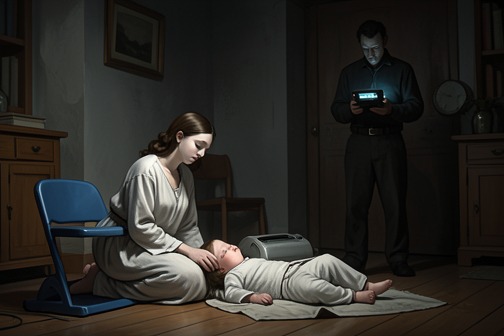
Abra’s infancy premonition of the [September 11 attacks](entity:event-recall-event-386102a65454) is presented through a convergence of two parental dreams, a night of unexplained crying, and the moment the second hijacked jet struck the [World Trade Center](entity:location-recall-location-world-trade-center-4aee445e06aa). At five months old, Abra could not explain what she experienced; instead, the event reached her parents as a pair of disturbing images that acquired meaning only when the news supplied their context.
## The dreams
About five months after a disagreement over whether Abra’s caul mattered, [Lucy Stone](entity:character-recall-character-a16ed8c66dc9) dreamed that her daughter was crying somewhere far from the family home on [Richland Court](entity:location-recall-location-ba195570edf5). The dream shifted from a corridor lined with doors to rows of high-backed blue seats, suggesting that Lucy was aboard a plane or perhaps a train. She ran toward the sound and found Abra behind a bathroom door. The dream’s specific setting made the image of a child in peril feel like a threat in transit, though Lucy did not yet have any reason to connect it to a real journey or disaster. When she opened the door, she saw Abra on the floor, and the number 11 was written on the baby’s chest.
[David Stone](entity:character-recall-character-david-stone-f031300ed374)’s dream offered a different setting but likewise centered on a desperate attempt to reach his daughter. He chased Abra’s cries up an escalator moving down inside a burning mall. The flames did not produce smoke, and the people around him ran without helping the child. At the top, he found Abra lying on the floor, and the number 175 was written on her chest. Where Lucy’s dream placed Abra in a conveyance’s bathroom, David’s made the surrounding public space chaotic and dangerous. Neither dream provided an explanation; each supplied a number whose significance remained suspended until the following morning’s reports.
## The crying and the attacks
The Stones woke together, at first taking the sound of crying for an echo of their dreams. Abra was awake in her crib beneath a Shrek mobile, crying continuously. Ordinary attempts to soothe her failed: a diaper change, feeding, carrying her along the hallway, and singing did not settle her. At two in the morning, Lucy called her grandmother, [Concetta Reynolds](entity:character-recall-character-concetta-reynolds-71d47aef8eb8), in [Boston](entity:location-recall-location-boston-aded649f4602). Concetta asked about symptoms that might suggest a routine physical problem, but Lucy reported none that resolved the concern. By the time the family reached [Bridgton Hospital](entity:location-recall-location-bridgton-hospital-1924778d9749), at about quarter to four, Abra was still crying at full volume.
The crying ended in close alignment with the attacks. [John Dalton](entity:character-recall-character-john-dalton-8f339fefeb9d) told David that a passenger jet had hit the World Trade Center and that no one believed it was an accident. The aircraft was American Airlines Flight 11. United Airlines Flight 175 struck the South Tower seventeen minutes later, at 9:03 a.m. At that same time Abra abruptly stopped crying; by 9:04 she was asleep. The sequence gives the episode its decisive pattern: the number from Lucy’s dream matched Flight 11, the number from David’s matched Flight 175, and Abra’s prolonged distress ceased at the moment Flight 175 hit.
On the drive back to [Anniston](entity:location-recall-location-289fc0d62743), Abra slept peacefully in her car seat while David and Lucy listened to the radio. David kept listening until a broadcaster listed the airlines and flight numbers, then silenced the news. The contrast between the continuing public catastrophe and the sudden quiet in their car makes the end of Abra’s crying both a precise point in the chronology and the parents’ most unsettling evidence. The dreams had preceded the attacks; the baby’s distress had continued through the night; and her sleep began at the second impact.
## Recognition and significance
David later arranged the episode as a story for John Dalton, beginning with Abra’s marathon crying and then returning to the dreams. He stressed the correspondence between the numbers and the two aircraft, while acknowledging that the dreams did not tell him what the numbers meant beforehand. His account preserves that uncertainty: the correspondence seemed conclusive to him, but its mechanism remained unknown. Lucy, when David began to say that he had dreamed, told him that she had dreamed too. Their shared experience did not amount to an explanation, but it made the event harder to dismiss as an individual misremembering.
By the time the Stones crossed back into [New Hampshire](entity:location-recall-location-new-hampshire-5211f8695ec5), David had begun to believe there might be something to the earlier discussion of Abra’s caul. The premonition therefore changes the family’s understanding of an unusual birth detail into a question about Abra’s abilities. It does not establish a general account of those abilities or clarify exactly how the dreams and crying were connected. Instead, its force lies in the alignment of separate details: two parents dreaming different flight numbers, a five-month-old’s unexplained crying, the attacks’ reported flight numbers, and a sudden end to the crying at 9:03. The event is both a family crisis experienced before its meaning is known and a retrospective recognition shaped by the public news that follows.
Event 8
Abra Telepathically Plays a Beatles Song from Her Crib
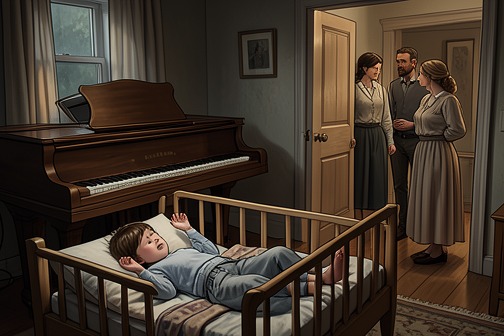
Abra Stone’s infant performance of a Beatles song is an early, domestic revelation of her extraordinary psychic ability: while she is in her crib, the piano break of *Not a Second Time* sounds perfectly through the house without anyone touching the instrument. What begins as a frightened search for a burglar becomes a deliberate test, and then a small, tender glimpse of Abra entertaining herself. The episode reaches the reader through her father Dave Stone’s later recollection to [John Dalton](entity:character-recall-character-john-dalton-8f339fefeb9d), giving an intimate family memory the force of testimony.
## A song learned before the performance
In spring 2002, Dave explains, [Lucy Stone](entity:character-recall-character-a16ed8c66dc9) has played piano since grammar school. The family’s Vogel piano stands in the living room; Dave notes that the same room once held Abra’s playpen. For Christmas in 2001, he gave Lucy a book of Beatles songs arranged for piano. Abra had listened to her mother play while lying among her toys, and the adults read her smiles and kicking feet as signs that she enjoyed the music.
The song that most delighted Abra was not one of the collection’s best-known hits, but the B-side *Not a Second Time*. Dave describes its upbeat character and its piano-centered riff, unusual beside the guitar-driven sound of much of the Beatles’ faster music. During the instrumental break, the left hand picks out just twenty-nine notes. Dave stresses the tune’s simplicity: it was easy enough for a child to play, and, as he would discover, Abra did play it. His memory of her dancing feet supplies the first hint that the music has become something more than background sound: she bicycled her legs whenever Lucy played that number.
## The first impossible performance
One night, Dave and Lucy were upstairs in bed reading while a weather report played on television. Abra was in her room, believed to be asleep. When Lucy asked Dave to turn off the TV, he used the remote; as the room went quiet, the twenty-nine-note piano break sounded from downstairs, perfectly played. Dave and Lucy feared that someone had entered the house. He had no gun, and his golf clubs were in the garage, so he took the largest book he could find and went down to confront the supposed intruder. He told Lucy to take the phone and call 911 if he shouted.
The search found no one. Every door was locked, and the cover over the piano keys was down. Dave returned upstairs and, without discussing what they suspected, he and Lucy went together to check on Abra. She was awake in her crib, simply looking at them. Dave’s recollection lingers on the knowing quality of her baby eyes, but the parents do not yet say aloud that the music came from their daughter. Their silence holds the moment between ordinary explanations and recognition: the evidence is unmistakable, but its meaning is difficult to speak.
## Testing the sound
After they had a couple of nights off, Dave and Lucy made a plan. For the next three nights Dave slept on the sofa opposite the piano, keeping watch. On the third night, the music began as he was settling down. The piano’s cover was closed; he hurried over and lifted it. The keys were not moving. More than that, Dave could tell that the sound was not coming from the instrument at all. It seemed to issue from the air above it.
Lucy was already in Abra’s room. This time, rather than remaining stunned, she asked Abra to play the passage again. After a brief pause, the same music sounded once more. Dave was standing so close that the notes seemed almost within reach, yet no visible hand or moving key produced them. The test changes the episode from a baffling noise into a witnessed demonstration: Abra can reproduce the tune on request, while the closed piano and motionless keys rule out an ordinary performance at the instrument.
## A lullaby, then silence
Lucy took Abra onto her lap and told her not to play at night anymore because the music was keeping her parents awake. That ended the nighttime performances, with one later exception: about three weeks afterward, Dave and Lucy heard the music again, much more softly, and this time from upstairs, from Abra’s room. The change in volume and location makes the final recurrence distinct from the earlier display above the piano.
[Concetta Reynolds](entity:character-recall-character-concetta-reynolds-71d47aef8eb8) offers a simple reading of that last sound. Abra had woken and could not get back to sleep, so she played herself a little lullaby. The explanation does not reduce the strangeness of the earlier performance; instead, it places the power within the ordinary rhythms of infancy. The episode’s stakes are at once uncanny and familial: the music frightens Abra’s parents when it seems to announce an intruder, but its return can also be heard as a child soothing herself. In Dave’s later account to John, the carefully counted notes, the covered keys, the silent search of the house, and the final soft reprise preserve the discovery in stages—from alarm, through proof, to affectionate recognition.
Event 9
Abra’s 9/11 premonition
Abra’s 9/11 premonition is remembered as a crying jag associated with the attacks, an early and unsettling sign of abilities that her family and doctor could not fully explain. Its significance lies partly in that uncertainty: it is treated as suggestive evidence of foreknowledge, while the precise content of what Abra perceived remains unspecified.
## The Recalled Episode
[Concetta Reynolds](entity:character-recall-character-concetta-reynolds-71d47aef8eb8) later told [Lucy Stone](entity:character-recall-character-a16ed8c66dc9) that she already knew about Abra’s 9/11 crying jag, as well as the phantom piano. Her account establishes the crying episode as part of the family’s record of Abra’s unusual experiences, but does not describe what Abra saw or knew, or explain exactly how the episode unfolded. The event enters the narrative through recollection rather than through a detailed scene of the premonition itself.
## A Related Demonstration of Awareness
Concetta also recalled visiting Lucy a week or two later, after asking Lucy not to tell Abra she was coming. Ten minutes before Concetta arrived, Abra planted herself in front of the door; when Lucy asked who was coming, Abra answered, “Momo.” [David Stone](entity:character-recall-character-david-stone-f031300ed374) said Abra often did this when someone she knew and liked was on the way. The episode is distinct from the 9/11 crying jag, but gives the family a concrete example of Abra sensing an event before it was announced.
## Interpreting the Evidence
When Lucy asked what Abra’s abilities were, [John Dalton](entity:character-recall-character-john-dalton-8f339fefeb9d) judged that telepathy and telekinesis clearly played a part. He counted her ability to know when visitors were coming and to know that Mrs. Judkins had been hurt as evidence for telepathy, and the events at Abra’s birthday party as strong evidence for telekinesis. He was less certain about precognition: the 9/11 episode and a twenty-dollar bill behind the dresser were suggestive, but did not settle the question. The episode therefore serves as evidence of possible foreknowledge, not as a fully explained or precisely documented prediction.
## Significance
The 9/11 crying jag becomes one item in a widening pattern that forces Abra’s family to consider several kinds of psychic ability at once. Its retrospective framing preserves a gap between what the adults can report and what Abra may have experienced: the family remembers the distress and later weighs its meaning, but the episode’s exact message remains unrevealed.
Event 10
Abra Warns of Wanda Judkins’s Fall and Saves Her
[Abra Warns of Wanda Judkins’s Fall and Saves Her](entity:event-recall-event-abra-wanda-judkins-8e573a40caa5) is a childhood episode in which Abra Stone’s warning brings her family to a neighbor who has fallen and cannot call for help. The rescue turns an ordinary holiday afternoon into evidence that Abra can perceive danger at a distance, and that acting on her warning can change its outcome.
## The Warning
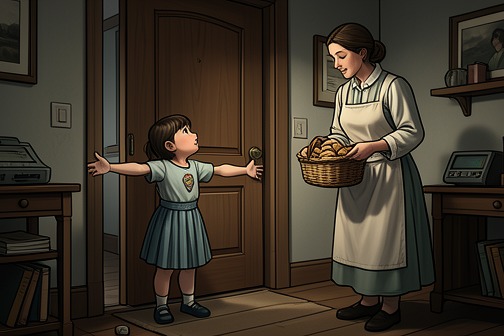
In the summer of 2003, while [Concetta Reynolds](entity:character-recall-character-concetta-reynolds-71d47aef8eb8) was spending the Fourth of July weekend with the Stone family, Abra was playing with plastic blocks in the living room. On Sunday, July 6, [David Stone](entity:character-recall-character-david-stone-f031300ed374) had gone to a 7-Eleven for a fresh Blue Rhino canister for the backyard barbecue. Concetta and [Lucy Stone](entity:character-recall-character-a16ed8c66dc9) were in the kitchen unloading the dishwasher when Abra began screaming.
Concetta hurried to the living room, expecting that Abra had been hurt. Abra was physically unharmed, but she clung to Concetta and urgently said that Wannie needed help and had fallen. Lucy recognized Wannie as Wanda Judkins, the widow who lived across the street. Wanda was a favorite neighbor: she brought Abra cookies with the child’s name written on them, sometimes in raisins and sometimes in frosting.
## Finding Wanda
Concetta and Lucy went across the street, with Lucy carrying Abra. At the door, Abra specified that Wanda was in the dining room, had hurt herself, and was bleeding. No one answered their knock, but the door was unlocked, so they went inside.
They found Wanda on the dining-room floor beside a stepladder, with the dusting rag still in her hand. Lucy found a pulse. Wanda had fractured her skull and suffered a small brain bleed, but she woke the next day. The emergency-room doctor later judged that a longer delay could have left her dead or in a persistent vegetative state. The family’s prompt response to Abra’s warning had therefore prevented a potentially fatal delay.
## The Story’s Significance
The episode is presented retrospectively: when Abra’s pediatrician, [John Dalton](entity:character-recall-character-john-dalton-8f339fefeb9d), hears about her abilities, David prompts Concetta to tell him what happened. Concetta recounts the incident as a specific, consequential instance of Abra’s perception, rather than as one of the less measurable patterns her parents had grown accustomed to noticing.
The warning arrives before the family knows that Wanda is in danger, and Abra identifies both the neighbor and where to find her. Her ability is thus shown not only as unusual knowledge but as knowledge that can prompt an effective rescue. Wanda recovered in time to be expected at Abra’s upcoming birthday party, a practical, forward-looking detail that underscores how the emergency ended in survival.
Event 11
The Floating Spoon Incident at Abra’s Birthday Party
[The Floating Spoon Incident at Abra’s Birthday Party](entity:event-recall-event-abra-d5894ede5b1c) turns a child’s attempt to imitate a magician into a startling demonstration of Abra Stone’s ability. The transition is sharp: first, spoons are objects in a performer’s tricks; moments later, the spoons from the family’s kitchen drawer hang overhead, beyond the reach of ordinary explanation. [John Dalton](entity:character-recall-character-john-dalton-8f339fefeb9d), [Lucy Stone](entity:character-recall-character-a16ed8c66dc9), [David Stone](entity:character-recall-character-david-stone-f031300ed374), and [Concetta Reynolds](entity:character-recall-character-concetta-reynolds-71d47aef8eb8) witness the display, while Abra’s fear that she has done something wrong makes the supernatural event a family moment as well as a revelation.
## The Birthday Performance
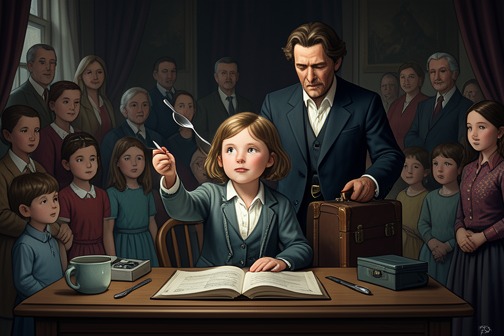
The incident begins at Abra’s birthday party with Reggie Pelletier, performing as The Great Mysterio, entertaining the children. His assistant, David Stone, sets up the table and opens the suitcase as the magician draws the guests close to a flower that sprays water at them in red, green, and blue. The children answer the surprise with shrieks and laughter. The performance establishes a lively, deliberately theatrical setting in which objects repeatedly seem to change their nature: a rabbit emerges from a derby, vanishes from view, and is explained away as having gone into a child’s dreams.
Mysterio keeps the audience’s attention through a rapid series of tricks. He produces scarves from his fists and, after appearing to empty his suitcase, brings out five plates and juggles them while singing Happy Birthday to You. The children join in; Abra is so delighted that she seems almost to levitate. Mysterio returns the plates to the suitcase, shows it empty again, and then produces half a dozen spoons, hanging them from his face and balancing one on his nose. Abra watches this comic handling of ordinary cutlery and announces that she can do spoons too. Her claim is treated as a child’s playful boast, not as a warning. The difference between the magician’s practiced illusion and Abra’s actual power has not yet become visible to the adults.
## The Drawer and the Ceiling
As Mysterio prepares to leave, a loud, musical jangling comes from inside the house. The children briefly glance toward the sound, but remain focused on the departing performer. Lucy goes into the kitchen to find out what has fallen over. Two minutes later she returns and tells John that he should see what has happened. The transition from outdoor entertainment to indoor discovery places the adults’ attention on the kitchen only after the birthday performance has ended.
John, Lucy, and Concetta stand staring upward when David joins them. The silverware drawer has shot out of its socket. Some knives and forks have bounced free, but the spoons are no longer in the drawer: they hang from the ceiling as if pulled upward and held there by an unfamiliar force. A couple swing lazily from the light fixtures, while the largest, a serving spoon, dangles from the stove’s exhaust hood. Their different positions make the display concrete and difficult to dismiss as a single object falling or a trick performed at the party. The kitchen utensils have become the center of everyone’s attention, and the adults are left speechless.
David leaves, then returns with Abra by the hand. She carries a balloon and wears the scarf Mysterio gave her around her waist. These details connect the two scenes: the birthday girl brings the magician’s prop into the kitchen, while the spoons above her echo the spoons she had just watched him use. John kneels beside her and asks whether she did it. He is already sure of the answer, but wants to learn how much she understands. His question makes the display more than a spectacle: it is also an attempt to gauge Abra’s awareness of her own power.
## Abra’s Fear and the Spoons’ Fall
Before answering, Abra looks down at the floor, where the drawer lies. Her response is hesitant and frightened. She asks whether she is in trouble, then explains that she wanted to be like Mysterio. The confession gives the incident its emotional center: the spoon display follows not a declared intention to frighten or impress the adults, but a child’s wish to reproduce what she has seen. The performance has supplied an example for her to imitate, though what occurs in the kitchen is unlike the magician’s staged tricks.
Abra’s distress is visible in her body. She begins to cry and tries to cover her mouth with the hand she uses to comfort herself; John gently holds it away so he can hear her. When she can no longer hold it back, David picks her up and kisses her cheek, and Lucy embraces them both, telling her she is not in trouble and is fine. Abra buries her face against her mother’s neck. At that moment, the spoons fall, and their clatter makes everyone jump. The timing links the end of the suspended display to Abra’s retreat into her mother’s arms, although the scene does not establish that she consciously causes them to drop.
## Significance
The event reveals a striking contrast between representation and reality. Mysterio can make a rabbit disappear, produce scarves and plates, and hang spoons from his face as part of an entertaining act; Abra’s spoons, by contrast, rise from a drawer and remain suspended across the kitchen ceiling. Her earlier claim that she can do spoons is transformed from amusing imitation into evidence of a capacity the adults must take seriously. The birthday setting keeps that revelation grounded in ordinary family life: a balloon, a gifted scarf, a displaced drawer, and familiar cutlery frame the unexplained occurrence.
The adults’ response also shapes what the revelation means for Abra. John tries to understand her awareness rather than accuse her, and her parents answer her fear with affection and reassurance. The spoons’ fall punctuates the scene with a sudden physical sound, but the lasting change is in what the family has seen: Abra’s wish to imitate a stage magician has exposed an ability that is genuinely hers. The incident therefore joins wonder to vulnerability. The display is extraordinary; the child at its center is chiefly worried that she has broken a rule and disappointed the people around her.
Event 12
Abra and Dan Establish a Psychic Connection as Charlie Hayes Dies
[Charlie Hayes](entity:character-recall-character-charlie-hayes-638aa7d439ef)’s death brings Dan Torrance into the work he understands best: staying with a frightened person at the threshold and helping him pass it. At the same time, the encounter opens a psychic channel between Dan and Abra Stone. It begins not with a conversation or a meeting, but with a presence Dan cannot see, a few piano notes, and the recognition that someone has been reaching him through his blackboard.
## Charlie’s Final Night
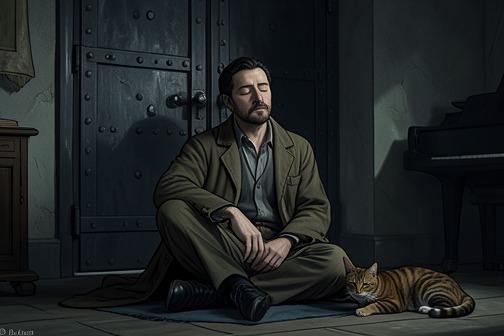
The door to the Alan Shepard Suite stands partly open when Dan arrives. Charlie is ninety-one and gravely ill; Dan pauses to make sure the old man is still breathing. [Azzie](entity:character-recall-character-d00229cfef28), the cat, is curled beside him. Charlie’s eyes remain closed, but he tells Dan that he knows why both the cat and Dan are there. Dan gives a casual explanation, then notices bruises on Charlie’s arm. He recognizes them as marks left by [Fred Carling](entity:character-recall-character-fred-carling-40224b72ec99), and feels anger at the mistreatment. His sobriety has given him greater control, not erased the anger or the occasional urge to drink.
The immediate need, however, is Charlie’s fear. He admits that he is scared, not of hell but of there being nothing after death. Dan does not dismiss the fear or claim to know precisely what follows. He assures Charlie that people do not simply end, and promises to help him cross over. When Charlie asks if Dan can help people, Dan says yes. He takes both of the old man’s hands and describes the passage as going to sleep, with waking to follow.
Touch gives Dan access to a succession of Charlie’s memories: his family, work, and ordinary pleasures across a long life. The scenes span childhood, adulthood, and old age, so the dying man is not reduced to his illness or the fear he voices at the end. Dan understands his presence in that room as the purpose toward which his own suffering has brought him. Charlie has reached the border, and Dan’s task is to accompany him rather than turn away.
## Death and the First Signal
After Charlie’s final exhalation, Dan waits. A faint red mist rises from the dying man and then fades. Dan recognizes it as what a nurse once called [the gasp](entity:expression-recall-expression-the-gasp-529dd68931a3), something he has witnessed before. The moment confirms the pattern of his work: the death itself is followed by a perceptible sign of passage, though Dan does not explain what that sign means or where Charlie goes.
Dan then addresses the unseen presence he has sensed. He asks whether the visitor is the little girl who sometimes writes on his blackboard, and whether her name is Abra. At first there is no answer. Then a faint ripple of piano notes comes from the empty doorway. Dan allows that he might mistake imagination for [the shining](entity:expression-recall-expression-the-shining-9ed9f640e588), but Azzie’s ears twitch and the cat keeps watching the doorway. The cat’s reaction gives Dan another indication that someone is there.
A second ripple of notes follows. This time the presence is gone. Dan lowers the bed, covers Charlie, and returns to the nurses’ station to report the death. The order matters: the contact does not interrupt his responsibility to Charlie. Only after the old man has passed does Dan turn fully toward the unknown visitor, and even then the exchange remains brief and wordless.
## A Connection Across Distance
The contact continues later, when a gust of wind fills the turret and Dan senses the blackboard girl again. He reaches out from his bed; a small, warm hand slips into his. Dan names her as Abra and recognizes that people sometimes call her Abby. She gives no verbal answer, but the touch is enough to soothe him, and he falls asleep. Twenty miles away, in [Anniston](entity:location-recall-location-289fc0d62743), Abra experiences the hand holding hers before it dissolves. She understands that the room and the man she found in a dream were real, and that the cat had seen her when the man could not.
The episode therefore establishes reciprocity without making the connection an ordinary face-to-face meeting. Dan first hears Abra through piano notes; later, both experience the same brief touch across distance. The blackboard, the music, and the hand are successive forms of contact, while the cat supplies an independent sign of Abra’s presence in the room. Dan can identify her, but the first encounter does not yet give him a full account of who she is or why she has reached him.
## Later Recognition and Significance
Dan and Abra’s family relationship becomes clear only later. He tells [Lucy Stone](entity:character-recall-character-a16ed8c66dc9) that they share a father, and eventually calls Abra his niece. In a later conversation, Lucy connects Abra’s abilities to the shining, while Dan explains that he has encountered many people who possess it to varying degrees. That later knowledge places the first contact within a wider family history, but it does not change what the scene initially shows: a psychic bond forms before Dan knows Abra’s identity or kinship to him.
The encounter also links two kinds of care. Dan attends to Charlie’s fear and bodily presence at the end of life, then responds to an unseen child reaching toward him. Neither connection depends on a conventional exchange of information. Charlie’s memories arrive through touch; Abra’s presence arrives through sound and shared sensation. The scene makes Dan’s capacity to accompany the dying and his ability to recognize the shining parts of the same practice of attention: he listens, waits, and answers what others cannot readily perceive.
Event 13
The True Knot’s Steam Shortage Crisis
The True Knot’s steam shortage crisis turns a member’s death into evidence that the group’s long decline may have become an immediate survival emergency. [Tommy](entity:character-recall-character-tommy-6e67d140947b)’s sudden death, a rise in minor illnesses, and a nearly empty supply of stored steam converge on a stark reckoning: the True Knot must find a substantial new source of nourishment soon, or face the consequences of living on too little.
## Tommy’s death and the first warning
The crisis sharpens when [Crow Daddy](entity:character-recall-character-crow-daddy-e1d33d51f1cc) tells [Rose the Hat](entity:character-recall-character-rose-the-hat-b60da949127a) that Tommy died in his sleep. He had cycled once before dying, and the passing was quick. Crow Daddy reports that Heavy Mary was beside him; she woke as he was in distress, but the episode was over before she understood what was happening. [Walnut](entity:character-recall-character-734b901330d3), the True Knot’s healer, thinks a bad cold may have contributed, along with Tommy’s long-standing smoking. The cause remains uncertain, but the death arrives amid a broader pattern that Rose cannot dismiss.
The loss carries a particular weight for Heavy Mary. She and Tommy had been together for almost ninety years, reaching back to when he was known as Tommy the Wagon. Mary had cared for him after his Turning and given him his first steam when he woke the following day. Now she is heartbroken and speaks of taking her own life. Rose is shocked: the True Knot has not previously had a member express such a wish. Tommy’s death therefore registers not only as a loss but as a rupture in a group whose continued existence has seemed inseparable from its will to live.
## A pattern of weakness
Crow Daddy adds that, although members of the True Knot do not usually catch colds, several have recently developed sniffles that come and go. Walnut suspects malnutrition, though he has no firm diagnosis. The symptoms connect Tommy’s death to the group’s scarcity without proving a single medical cause: inadequate steam is a plausible explanation, not a confirmed one.
Rose initially points to a recent supply of steam taken in Delaware. The child they fed there, however, had not provided much, and the group’s nourishment may have been insufficient even though Tommy seemed to recover and gain weight afterward. That contrast unsettles the idea that any recent feeding has restored the True Knot. Rose also considers whether people capable of providing the nourishment the group needs are becoming harder to find, comparing the possibility to dwindling schools of tuna. It remains a fear rather than a demonstrated fact, but it widens the crisis from a temporary shortage to a question about whether adequate supplies will remain available.
## The canisters and the arithmetic of scarcity
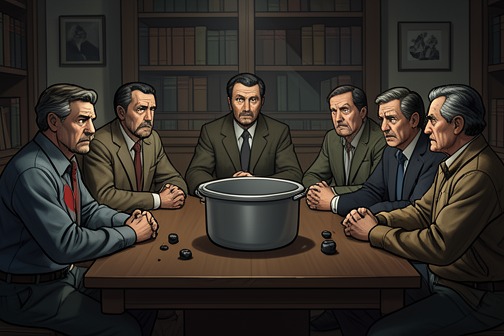
The storage inventory gives the concern its most concrete measure. On a May morning in Kentucky, Rose checks the safe, which is lined with Styrofoam to protect its canisters in a road accident and has forty built-in cradles. Thirty-seven cradles are empty. Crow Daddy has estimated that only fifteen or twelve full canisters remain, a deliberately low estimate intended to reassure Rose; her own inspection shows that the situation is worse. She lifts one of the remaining full canisters, checks that its valve seal is intact, and places it carefully on the counter. After that night, only two full canisters will remain.
The canisters make the shortage visible as a finite reserve rather than a vague anxiety. Their protective housing and orderly cradles speak to a group accustomed to moving and preserving its supplies, but the empty spaces now dominate the inventory. Checking a seal can preserve what is stored; it cannot replenish what has been used. The reserve therefore gives Rose a countdown with practical consequences: the True Knot needs to obtain a substantial supply of steam and refill at least some of the empty canisters, and it needs to do so soon.
## A crisis of survival and confidence
Rose and Crow Daddy approach the danger from different angles. Rose measures what remains and considers possible explanations; Crow Daddy presses her to acknowledge what the whole group is thinking, even if no one has said it openly. His warning makes the shortage collective: the deaths and illnesses are not isolated matters that Rose can manage privately. As her second, Crow Daddy is also the one willing to insist that the stored supply be examined rather than treated as adequate.
The episode ends with the True Knot’s back not quite against the wall, but only inches from it. That qualification preserves a narrow margin for action while making the urgency unmistakable. The group has not yet run out, and the precise cause of Tommy’s death is not established; nevertheless, the combination of a death, recurring sniffles, possible malnutrition, and two remaining full canisters makes the danger impossible to treat as remote. A group accustomed to endurance now faces a material limit: its survival depends on finding enough nourishment before its reserve is exhausted.
Event 14
Bradley Trevor Is Kidnapped and Killed by the True Knot
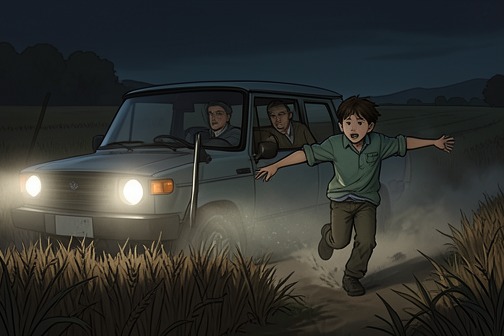
[Bradley Trevor](entity:character-recall-character-bradley-trevor-7643b8abb94c)’s abduction and murder expose the True Knot’s method in its starkest form: a child’s unusual perception makes him a target, an apparently friendly stranger carries him away, and the group turns his suffering into the steam on which it depends. The sequence moves from the finders’ methodical search across rural Iowa to Bradley’s disappearance, the false reassurance of [Barry](entity:character-recall-character-barry-1c8c06153a31)’s offer, and the killing at an abandoned ethanol plant. By dawn, Bradley is buried and the True Knot has left.
## The Search and the Target
The search begins with three finders following a psychic ping while most of the True Knot waits at a rest area forty miles east of Council Bluffs. Their RVs leave the turnpike at Adair and travel north into the countryside. Once away from the interstate, they separate across a grid of gravel farm roads, approaching from different directions to triangulate the signal. It grows stronger, then levels off: a useful source of steam, though not an exceptional one. The cool appraisal makes the danger plain before Bradley appears. The finders are not looking for a person to meet or help; they are locating a resource.
Bradley is eleven, a farm boy and the best hitter on the local Little League All-Star team. His ability shows itself in ordinary, practical ways as well as in baseball: he seems to know which pitch is coming, where to drill a stock well, where a lost cow has gone, and where his mother’s missing engagement ring can be found. Those talents have helped make him valuable to his family and team; to the True Knot, they signal the presence of steam worth taking. His gift is not presented as a spectacle. It is woven into familiar details of farm and ballfield, which makes the group’s predation on him all the more chilling.
## Abduction
On the day he disappears, Bradley has a headache and feels feverish. After practice, he is unusually distracted and declines a soda, wanting instead to go home. He feels that his mind is not quite his own and is uncertain whether he is fully present or dreaming. A red spot on his forearm draws his attention, but the evidence does not identify its cause. He leaves the field on foot, taking a shortcut through the corn toward his family’s farm, two miles away.
At Town Road D, [Barry the Chunk](entity:character-recall-character-e6c9d3551243) is waiting beside a midsize WanderKing. He presents himself as a friend offering a ride home. Bradley accepts, repeating Barry’s name and the assurance that he will be taken home as if the suggestion has settled the matter. He steps into the RV; the door closes, and the vehicle drives away. The speed and plainness of the exchange are central to the abduction: the finder does not need to overpower Bradley in public when an offer of help, arriving as Bradley feels confused and unwell, is enough to get him into the vehicle.
By the next day, the county is searching for the missing centerfielder and best hitter. State Police ask residents to report strange cars or vans, and many reports come in, but none leads to Bradley. The RVs carrying the finders escape notice despite their size. Traveling together, they are treated as ordinary RV people rather than as a threat. The contrast is between an organized search that cannot identify the danger and a coordinated group that has already carried its victim away. Bradley is simply gone from the community that knows him.
## At the Abandoned Plant
The True Knot takes Bradley north to an abandoned ethanol-processing plant, miles from the nearest farmhouse. [Crow](entity:character-recall-character-crow-350aeee0ff10) carries him from [Rose the Hat](entity:character-recall-character-rose-the-hat-b60da949127a)’s EarthCruiser and lays him on the ground. Bound and weeping, Bradley asks to be taken home and promises not to tell. Rose answers that she would take him home if she could, while Bradley turns to Barry, recalling that Barry had presented himself as one of the good guys. Barry offers no real apology; he regards the killing as impersonal and necessary to the group’s appetite.
The True Knot’s rationale is explicit: pain purifies steam, and the group must feed to survive. Its members regard the child as food rather than as a person whose pleas create an obligation. Rose says she will hurt him as little as possible, but the killing lasts a long time. The account does not soften the cost of producing steam: Bradley’s cries continue until they become husky barks, and eventually they turn to steam. The group’s language of necessity does not make the act less deliberate; it shows how completely its survival creed has made violence routine.
## Burial and Significance
At dawn, the True Knot buries Bradley’s body and moves on. There is no recovery for his family or community in this immediate aftermath, only a missing child and a search that has failed to find the large vehicles that took him. For the True Knot, departure is part of the pattern: the killing is followed by concealment and continued travel, not by any reckoning with the people left behind.
The scene also clarifies the group’s dependence on steam. At the [Kozy Kampground](entity:location-recall-location-kozy-kampground-63f22e45380d), Rose arrives at a gathering carrying a canister, and the True Knot receives and breathes in its contents together. That earlier ritual shows the collective purpose behind the hunt: steam is gathered, shared, and treated as nourishment that sustains the group. Bradley’s murder gives that practice its human cost. His exceptional instincts, which in a different community might have been understood as gifts, become the signal by which the finders locate him. The chapter’s movement from triangulation to abduction to burial turns a psychic ability into a mechanism of exposure—and a child’s disappearance into fuel for the True Knot’s survival.
Event 15
The True Knot Discovers Abra and Targets Her
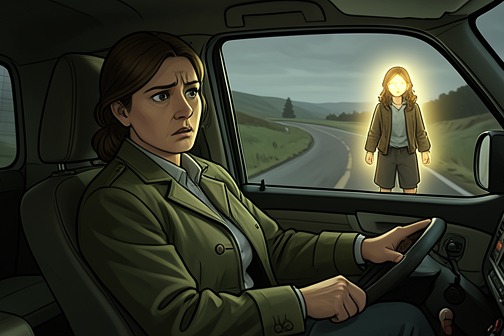
[The True Knot Discovers Abra and Targets Her](entity:event-recall-event-true-knot-abra-27eee0d28d44) when [Rose the Hat](entity:character-recall-character-rose-the-hat-b60da949127a) encounters a distant psychic presence powerful enough to interrupt her predatory work and, later, to throw her out of Abra Stone’s mind. The discovery changes a fleeting impression into a deliberate pursuit: Rose sees Abra as an immense potential source of steam, but also as someone whose resistance has wounded her pride. The event begins not with a face-to-face meeting but with a brief, unsettling glimpse across distance, then gathers force as Rose interprets what happened and makes the child her objective.
## The First Glimpse on the Road
As the True Knot headed west along I-80 toward the Colorado high country, Rose rode in the shotgun seat of her EarthCruiser. [Jimmy Numbers](entity:character-recall-character-jimmy-numbers-6ed594d18500) was temporarily driving [Crow Daddy](entity:character-recall-character-crow-daddy-e1d33d51f1cc)’s Affinity Country Coach. Rose’s satellite radio played Hank Jr.’s “[Whiskey Bent and Hell Bound](entity:expression-recall-expression-whiskey-bent-and-h-4eec2b4b34c9)”; [Crow](entity:character-recall-character-crow-350aeee0ff10) let the song finish before switching it off and asking about an earlier promise to talk. Rose described what they had encountered as a looker: someone with [the shining](entity:expression-recall-expression-the-shining-9ed9f640e588), glimpsed for no more than three seconds.
The impression was brief but forceful. Rose thought the looker was probably a girl, though she could not be sure, and placed her somewhere on the East Coast. She described the presence as huge steam. Its power was not merely a quantity Rose could estimate from afar: the unknown girl had seen what the True Knot was doing, and the horror Rose sensed from her struck back with enough force to freeze Rose’s hands and leave her feeling a sudden loathing. Rose understood that revulsion as a psychic ricochet rather than her own response. The moment therefore exposed an unusual vulnerability in the predator: the child’s perception could make Rose feel, however briefly, the horror of the violence she ordinarily treated as routine.
## From Possible Prey to Deliberate Target
Crow immediately proposed turning around and taking the girl while they could. Rose refused. She believed the looker was still growing stronger and wanted to let her ripen. Her answer converted the encounter into a question of timing: the child was not simply an opportunity to seize at once, but a potential source whose power Rose expected to increase. When Crow asked whether this judgment came from knowledge or intuition, Rose answered with a gesture rather than a firm explanation, leaving the basis of her confidence uncertain.
The practical stakes were already extraordinary. Asked how many canisters the girl might fill, Rose said at least three, deliberately understating her estimate: she privately guessed ten or perhaps twelve. Her comparison of the looker’s steam to a full boiler made the scale of the discovery legible in the True Knot’s terms, where a child’s suffering could be converted into stored sustenance. Crow’s suggestion that they might fill a dozen canisters if Rose did not attempt to Turn the girl sharpened the choice between harvesting her and recruiting her. Rose rejected recruitment. She did not want someone with that much power inside the True Knot, while the group’s need for stored steam outweighed its need for new members.
## The Failed Intrusion and Rose’s Motive
A little over two years later, Rose revisited the subject with Crow by recalling the boy in Iowa. The time gap connects the first glimpse to a later confrontation rather than presenting the discovery as a single, uninterrupted pursuit. Rose now reported that the girl was even more powerful than she had first believed. When Rose tried to turn the psychic encounter back against her, Abra expelled Rose from her mind as easily as a piece of milkweed fluff. Rose had never experienced anything like it and had considered such a reversal impossible.
Crow again asked whether Abra was a potential recruit or potential food. Rose said she did not know, but her reasoning showed that the question was effectively settled: the True Knot needed a large store of steam, and Rose would not permit someone so powerful to join them. She imagined the child as a source whose yield might exceed their available canisters, comparing her to Everest if she were a mountain. The scale of the opportunity did not soften Rose’s stance; it made Abra seem more valuable and more dangerous at once.
## Pursuit and Narrative Significance
Rose’s fixation exceeds the group’s calculation of how much steam Abra might provide. She compares herself to Captain Ahab sighting the white whale, a comparison that casts the hunt as an obsession as well as a plan. Her private reasoning makes the change explicit: she does not want Abra Turned into one of the True Knot. The child’s successful defense has instead made Rose want to teach her a lesson. Material appetite and injured authority converge, turning a strategy of exploitation into a personal vendetta.
After ending her call with Crow, Rose treats the discussion as closed, starts her truck, and leaves a supermarket parking lot for the family-owned [Bluebell Campground](entity:location-recall-location-bluebell-campground-e6061b95a5e0). The destination is identified as a beautiful location where one of the world’s great resort hotels once stood. The account thus moves Rose from distant detection and private resolve toward the place associated with the next stage of the conflict. Abra has not yet been captured in this event, and Rose’s certainty does not amount to control: the discovery establishes both the scale of her desire and the fact that the intended prey has already demonstrated an ability to resist her.
Event 16
Abra Identifies Bradley Trevor and Locates His Murder Site
Abra’s discovery of [Bradley Trevor](entity:character-recall-character-bradley-trevor-7643b8abb94c) in a local missing-children listing turns a private, fragmentary psychic encounter into a dated case of murder: she recognizes the boy, follows his memories to the place where he was taken, and writes down identifying details before they can fade. The sequence makes her ability concrete not as a vague intuition but as a painstaking act of recognition, investigation, and record-keeping.
## The photograph in the newspaper
On September 17, with Lucy away in [Boston](entity:location-recall-location-boston-aded649f4602), Abra finds a copy of [The Anniston Shopper](entity:object-recall-object-the-anniston-shopper-ac28175eec7e) among the household mail. The circulars and advertisements are ordinary bulk mail, and the Shopper is the sort of paper Lucy would normally have discarded. Abra thumbs through it on her way up the driveway, then notices the back page: dozens of small photographs under the heading “HAVE YOU SEEN ME?” The modest scale of the images gives the page the impersonal look of a listing, but for Abra it becomes a point of contact with a child she has already sensed.
Her attention first passes a photograph of Angel Barbera, a seven-year-old who disappeared from Kansas City nine years earlier. Abra wonders whether Angel’s parents could still recognize her, or whether Angel would recognize them. The questions establish the terrible distance that time and disappearance can create. Then Abra’s eyes reach the bottom row, where a photograph of a short-haired boy with a large grin triggers a moan before she fully understands why. She recognizes the freckles that the tiny picture can barely show and knows that the boy’s older brothers teased him about them, while his mother reassured him they would fade. Abra recalls the more particular truth: his mother told him freckles were good luck.
The listing identifies him as Bradley Trevor: born March 2, 2000, missing since July 12, 2011, last associated with Bankerton, Iowa. It gives his current age as thirteen. Abra understands that the notice is already out of date in a more final way: Bradley stopped growing at eleven, the age at which he was killed. The listing’s appeal for information therefore becomes a cruel mismatch between the hopeful form of a missing-child notice and the reality Abra recognizes. She whispers, “The baseball boy,” then bends over in the driveway and vomits into Lucy’s asters. Once she can move again, she throws all the mail away.
## Recognition through the left hand
Abra returns to Bradley’s image by placing the first two fingers of her left hand on it. That hand, she believes, sees better; although the photograph is too small to cover with her fingers, contact makes the boy more vivid rather than less. She perceives details the photograph cannot establish, including his deep blue eyes, and recognizes a likeness between them. Her left hand is also linked to baseball: like Abra, Bradley was right-handed but used his left hand to anticipate the pitch. Their resemblance gives her a way to understand why the attackers singled him out, though recognition does not make the memory easy to enter.
With her eyes closed, Abra gathers fragments of Bradley’s home life: his father was a farmer; his mother made pies and sold them at a local restaurant and the family farmstand. When Bradley’s older brother left for college, Bradley took his AC/DC discs. He and his friend Al listened to “Big Balls” together, singing and laughing on Bradley’s bed. Such details restore a life behind the thumbnail photograph. They also make the transition to the kidnapping especially stark: Bradley walks through the corn and meets a man he thinks is trustworthy.
Abra names the man as [Barry the Chunk](entity:character-recall-character-e6c9d3551243) and understands that the deception did not depend on him alone. The other members of the Flashlight People reinforced the idea that [Barry](entity:character-recall-character-barry-1c8c06153a31) was a good man and a friend, persuading Bradley that it was safe to enter his vehicle. In Bradley’s own view, the encounter had seemed benign; Abra’s wider perception exposes the coordinated lie behind it.
## Rewinding the abduction
Abra goes beyond what Bradley himself saw. He was taped up and lying face down on a gray rug in the vehicle, unable to see his surroundings. Once she is tuned in, she can perceive details outside his field of vision, including his Wilson baseball glove and Barry the Chunk. The image breaks off, however, and Abra cannot assume that a first glimpse will remain available. Her psychic access arrives in discontinuous pieces, demanding concentration rather than providing a complete account at once.
The next fragments disclose a night journey. Abra senses the smell of manure and sees a line of vehicles traveling with their headlights off beneath a three-quarters moon. The road is potholed and bumpy; the vehicles pass a water tower, a shed with a broken roof, and a rusty gate standing open. At a ruined factory, Abra glimpses a warning sign ordering trespassers away by the authority of the Canton County sheriff’s department. She understands that the vehicles are headed around the back of the building, where Bradley will be hurt until he dies. She refuses to watch that part and forces the scene backward, an effort she experiences as difficult, like opening a tightly closed jar.
The ability to rewind turns perception into an investigation. Abra returns repeatedly to the brief passage past the gate, trying to read a sign that flashes by too quickly. Sweat gathers on her forehead as she attempts again. On the next pass, she catches the words and immediately writes them on the reverse of a sheet of notepaper covered with boys’ names: ORGANIC INDUSTRIES, ETHANOL PLANT #4, FREEMAN, IOWA, and CLOSED UNTIL FURTHER NOTICE. The written place-name fixes what the vision might otherwise leave as a fleeting image.
## What the discovery establishes
Abra concludes that she knows where Bradley was killed and where he was buried, with his baseball glove. The conclusion rests on a chain of connected clues: the boy’s identity, Barry the Chunk’s role in luring him, the convoy’s concealed nighttime route, the abandoned factory, and the sign naming the ethanol plant in [Freeman](entity:location-recall-location-f2f37aa88ea1), Iowa. Her vision does not supply every answer, but it gives her a specific site and a reason to believe the glove remains there.
Knowing the location does not immediately tell Abra what to do. She doubts that the National Center for Missing & Exploited Children would take a child’s report seriously and fears her call might be treated as a prank. She considers telling her mother, then rejects the idea because Lucy is already occupied with [Concetta Reynolds](entity:character-recall-character-concetta-reynolds-71d47aef8eb8)’s illness. Instead, the written details become the tangible result of an encounter that has left her physically shaken: an address she can preserve, even as she has thrown away the newspaper that first disclosed Bradley’s name.
The episode shifts Bradley from an anonymous face among dozens of missing children into a particular person whose family, friendships, habits, and last journey Abra can partly recover. It also marks a change in her use of [the shining](entity:expression-recall-expression-the-shining-9ed9f640e588). She does not merely receive an impression; she tests it, revisits the scene, distinguishes Bradley’s limited viewpoint from what she can see, and records the evidence. The boy’s small photograph has not brought him home, but it has given Abra a location—and made his murder impossible for her to mistake for a disappearance.
Event 17
Abra and Rose the Hat’s First Psychic Confrontation
Abra and [Rose the Hat](entity:character-recall-character-rose-the-hat-b60da949127a)’s first psychic confrontation turns an ordinary supermarket visit into a two-way breach of consciousness. Abra is drawn away from her bedroom and into Rose’s perception; Rose, recognizing that someone has entered her mind, deliberately follows the connection. The encounter reverses their expected positions: Rose tries to use the intrusion to locate the girl, but Abra’s forceful refusal breaks the link and sends Rose staggering among the supermarket shelves.
## The Intrusion Begins
Abra has already considered who she might tell about what is happening, but she doubts that the person she has in mind would want to become involved even if he believed her. Before she can settle on another answer, the world outside her window begins turning as if mounted on a gigantic disc. She grips the window frame and bunches the curtains in her fists. This kind of displacement has happened before, always without warning, and frightens her because it feels like a seizure: she is no longer in her own body, but far-being rather than far-seeing. Her immediate fear is not only that she has been taken elsewhere, but that she may not be able to return.
The turning slows and stops with Abra at a supermarket meat counter. A brightly lit sign identifies the place as [Sam’s Supermarket](entity:location-recall-location-sam-s-supermarket-79e81b267a87), while the groceries in the lower part of her vision and the forward motion tell her that the body she is seeing is walking and shopping. She briefly wonders whether [Barry the Chunk](entity:character-recall-character-e6c9d3551243) is the person through whom she has arrived, because he is nearby. But the connection has drawn her away from him toward someone much more powerful. The change in viewpoint is literal as well as psychic: Abra sees the market from inside another person’s moving body, while that person looks outward through Abra’s window toward [Richland Court](entity:location-recall-location-ba195570edf5) and the [White Mountains](entity:location-recall-location-white-mountains-e5f2cf735798).
## Rose Follows the Connection
For Rose, the episode begins with a mundane explanation. As she leaves [Barry](entity:character-recall-character-barry-1c8c06153a31), she thinks she may be experiencing low blood sugar, a familiar problem for which she usually carries a candy bar. That ordinary hypothesis gives way when she recognizes that someone is inside her head and looking through her. She stops her cart, which had been headed toward the meat counter, and immediately leaps into the mental conduit.
Rose’s decision is informed by her position as head of the True Knot: she is not inclined to hesitate when an unfamiliar presence may pose a danger. She knows the intruder is not one of her own people, but also senses that this is no ordinary person. When the supermarket scene swings away and a mountain range appears, she tries to identify it. These are not the Rockies; she considers the Catskills or the Adirondacks, without being certain. The person looking back seems to be a girl, and Rose believes she has encountered her before. Rose then considers how seeing the girl’s face might let her find her again, beginning to turn the accidental contact into an opportunity for pursuit.
## Abra Breaks the Link
The shared viewpoint makes the confrontation more than an act of observation. Abra feels someone rummaging inside her, and understands that she is not alone on the turntable. Rose is not merely looking through the connection: she is present within the space Abra experiences as her own mind. Panic surges in Abra, but no sound comes out. Her lips remain pressed together as she forms a scream mentally: “NO! GET OUT OF MY HEAD!”
The thought strikes Rose with the force of a sudden blast. It wipes her mind clean and breaks the connection, sending her staggering into shelves of canned soups and vegetables. The cans cascade to the floor and roll everywhere. For a moment Rose thinks she may fall too, but she recovers. Abra has ended the contact with enough force to leave Rose shaken, yet Rose checks her nose and finds no blood. The interruption is both a defense and a reversal: Rose entered the conduit intending to inspect and identify the intruder, but Abra—not Rose—controls the moment at which it ends.
## The Ordinary Explanation
The psychic disturbance has a physical echo in Abra’s house. David feels the house rumble and sees the light fixture in his study sway from its chain. His first thought is that Abra has had one of her psychic outbursts, although he has not seen telekinetic activity from her in years and never anything like this. As the house settles, he decides that a [New Hampshire](entity:location-recall-location-new-hampshire-5211f8695ec5) earthquake is the more reasonable explanation.
David saves his work before leaving his desk and calls to Abra from the foot of the stairs to ask whether she felt the movement. She comes out of her room pale and frightened, beginning to tell him what she thinks has happened. He interrupts with enthusiasm, declaring that it was an earthquake and treating it as her first one. Abra agrees, but her unenthusiastic response does not match his excitement. David then looks outside, where people are gathered on their stoops and lawns, and says he will cross the street to speak with his friend Matt Renfrew. His explanation restores the appearance of an ordinary afternoon, but it does not account for the confrontation Abra has just experienced.
## Significance
The scene establishes a dangerous reciprocity in psychic contact. Abra’s far-being makes her vulnerable to sudden displacement, while Rose’s ability to enter the conduit turns that vulnerability into a potential means of finding her. Yet the first encounter does not end with Rose securing the information she wants. Abra’s refusal expels her, demonstrating that the connection can be resisted and that the girl Rose recognizes is not simply an object of observation. The supermarket’s fluorescent signs, groceries, and rolling cans ground an extraordinary mental struggle in everyday surroundings; outside it, the rumbling house is readily absorbed into David’s earthquake explanation. The contrast leaves Abra alone with the significance of what has occurred, while Rose has learned that the unfamiliar girl can strike back.
Event 18
Concetta Breaks Her Hip and Is Diagnosed with Pancreatic Cancer
[Concetta Reynolds](entity:character-recall-character-concetta-reynolds-71d47aef8eb8)’s spontaneous hip fracture turns an ordinary morning in her [Boston](entity:location-recall-location-boston-aded649f4602) apartment into the discovery of a terminal illness. The break is not caused by a fall: she first hears a snap and then finds herself on the floor, unable to get up. At the hospital, doctors repair her hip and uncover pancreatic cancer. Concetta’s response is decisive. She accepts surgery for the fracture but refuses cancer treatment and a prolonged stay, choosing instead to spend her remaining time with family and care arranged on her terms.
## The Fracture at Home
On an August morning in 2013, Concetta wakes early in her condominium and starts toward the kitchen to make coffee. She is ninety-seven, but has been getting around well and feels fine. Her dog, Betty, has been dead for years; otherwise, the familiar routine and the apartment’s quiet give her no reason to expect that this morning will be different. Halfway to the kitchen, she hears an insignificant snapping sound on her right side. Warm pain rushes through her leg, and she is on the floor.
Concetta lies there for about three minutes, watching her faint reflection in the polished hardwood and trying to will the pain away. Her thoughts turn at once to the practical consequence of having no companion. [David Stone](entity:character-recall-character-david-stone-f031300ed374) has been telling her for five years that she is too old to live alone, and she anticipates his reproach. Yet a live-in companion would occupy the room she keeps for [Lucy Stone](entity:character-recall-character-a16ed8c66dc9) and Abra Stone, whose visits matter especially now that Betty is gone and, as Concetta feels it, the poetry has gone out of her life. Her age has not erased her sense of independence or her attachment to the household she has made.
When she reaches the kitchen, she cannot simply pick up the phone. She shakes one leg of the little table until her cell phone slides to its edge and drops to the floor, fortunately unbroken. She calls emergency services and clearly gives her name, address on Marlborough Street, and the likelihood that she has broken her hip. Asked whether anyone is with her, she says she is alone and pointedly corrects the form of address she prefers. Pain and vulnerability do not prevent her from asserting herself. The scene makes the emergency concrete: getting help depends on her persistence, her ability to reach the phone, and her own coherent account of what has happened.
## From Hip Surgery to [Cancer](entity:state-recall-state-7f192d354550) Diagnosis
Lucy receives Concetta’s call shortly before she is wheeled into surgery. Concetta reports that the hip can be repaired with pins and explains that the break itself was spontaneous, rather than the result of a fall. The doctors tell her this kind of fracture is common among people her age. Her explanation changes the family’s understanding of the accident: the immediate injury is treatable, but it has exposed how vulnerable her body has become.
Concetta tells Lucy there is no need to come immediately, though they will soon need to discuss arrangements. Under the influence of medication, she feels serene enough to explain that the broken hip is the least of her problems. The hospital has discovered pancreatic cancer. She asks Lucy not to tell Abra, who is away at [Camp Tapawingo](entity:location-recall-location-camp-tapawingo-7e46af3a501d) and has been sending emails and even a letter. Concetta wants her great-granddaughter to enjoy her summer for the moment, rather than learn that her old Momo is dying while she is still away.
The request does not hold. Shortly after speaking with Concetta, Lucy receives a call from Abra, crying and saying she wants to come home because she already knows that Concetta has cancer. The rapid sequence—diagnosis, an attempt to protect Abra from the news, and Abra’s knowledge of it anyway—shows how little separation the family’s private fears can sustain. The illness is no longer only a matter to be managed between Concetta and Lucy; it has reached Abra as well.
## Concetta’s Terms for Care
After returning early from camp, Abra spends the last two weeks of August and the first week of September with Lucy in Concetta’s Marlborough Street condominium. Concetta has come through hip surgery well, but declines both a longer hospital stay and treatment for the pancreatic cancer. She refuses pills and chemotherapy and says that ninety-seven years are enough. She also rejects the prospect of Lucy spending the next six months bringing meals, medication, and a bedpan. Concetta can afford round-the-clock care, and she insists that her daughter has her own family to consider.
Lucy counters that her mother will not spend the end of her life among strangers. Their disagreement is not over whether Concetta needs care, but over what care should look like: paid assistance could spare Lucy exhausting daily tasks, while Lucy fears that such a plan would leave her mother isolated. Concetta’s insistence on refusing treatment is distinct from her wish to control where and how she is cared for. She accepts help as a practical necessity without surrendering her preferences, and Lucy’s response reflects a daughter’s determination to remain personally present.
Abra’s return to school limits how long the three can remain together in Boston. On September ninth, she is due to begin eighth grade; during David’s sabbatical year, she divides her time between her parents, spending weekdays with him and weekends in Boston with Lucy and Concetta. The fracture has therefore reorganized the family’s routines as well as prompted medical decisions. The shared stay gives Abra time with Concetta, while the cancer diagnosis makes those visits newly weighted with the knowledge that they are finite.
## The Illness’s Later Consequence
A later hospital scene shows Concetta near the end of her life. She lies in Room 9, surrounded by photographs, including images of Abra at different ages. Her only drip is saline, and her breathing is faint. Dan Torrance straightens her cannula and takes her hand. Their final conversation is brief; Concetta speaks mostly in Italian, manages to caress his stubbly cheek, and tells him she is ready. The scene does not undo her earlier refusal of chemotherapy or present recovery as an option. Instead, it returns to the distinction established by the fracture episode: medical intervention may repair the hip, but it cannot reverse the cancer. Concetta’s choices, and the family’s efforts to honor them while staying close, shape the passage from independence to assisted care and finally to a deliberate farewell.
Event 19
Abra Sees Rose at the Window and Calls Dan for Help
[Rose the Hat](entity:character-recall-character-rose-the-hat-b60da949127a)’s appearance at Abra’s second-story window turns a frightening suspicion into a direct threat. Abra recognizes the single discolored tooth [Bradley Trevor](entity:character-recall-character-bradley-trevor-7643b8abb94c) saw before he died, understands that Rose knows about her, and reaches inward for [Tony](entity:character-recall-character-tony-5974d3962a4a) so she can ask for Dan Torrance’s help. The encounter shifts her from trying to decide what to do to urgently calling on the one person she believes can help.
## From hesitation to danger
Abra has gone upstairs after telling her father she is heading to her room. At her desk she turns on her computer, then turns it off again: she does not want to play Fruit Ninja or message anyone. She knows she has to think, because she has to do something, but the next step has not yet resolved itself. She puts her schoolbooks into her backpack, an ordinary action that gives way abruptly to the impossible sight at the window.
The placement makes the image terrifying before Abra can explain it. The window is on the second floor, yet the woman from the supermarket is staring in at her. Abra registers that the woman appears extraordinarily beautiful: white, unblemished skin, high cheekbones, dark eyes, and masses of black hair. A jaunty, scuffed velvet top hat stays in place despite the impossible angle. Her appearance offers no reassuring explanation. Abra knows at once, without doubt, that the woman is insane.
## Rose at the window
The scene gives the apparition a precise, memorable face rather than leaving it as a vague disturbance. Rose grins, and Abra sees that she has only one upper tooth: a monstrous, discolored tusk. The detail changes the meaning of the encounter. This is not simply the woman Abra glimpsed before; the tooth connects the figure at the window to the violence Abra has already sensed through Bradley Trevor’s death. She understands that it was the last thing he ever saw.
Abra screams, but only inwardly. Her throat is locked and her vocal cords frozen, so fear cannot become a sound that would call anyone in the house. She shuts her eyes; when she opens them, the white-faced, grinning woman has vanished. The disappearance ends the visible encounter but does not make Abra feel safe. She understands that Rose is not there now, yet could come, and that Rose knows about her. Absence becomes a warning rather than relief.
## Recognition and appeal
The apparition supplies the recognition that turns fear into a decision. Abra recalls the abandoned factory and realizes she should have understood sooner that there was only one person she could call on, and only one who could help. The passage does not explain the factory further here; its importance lies in what Abra now sees as its connection to the danger. Rose’s appearance has made waiting or treating the threat as a distant mystery impossible.
With her eyes closed, Abra summons Tony and urgently asks for his father. The appeal runs through two forms: first an inward plea to Tony, then the spoken words, “Help me, Tony. I’m scared.” Tears are warm on her lashes and cheeks as she whispers. The moment is intimate and desperate, sharply unlike the silent scream she could not voice when Rose was visible. Now that the apparition is gone, Abra can speak, but the fear remains and has become a request for intervention.
## The scene’s turning point
The event reverses Abra’s immediate situation. She begins alone with an unresolved question about what to do; after Rose’s appearance, she has identified the threat and chosen to seek help. That movement is not a victory over Rose: closing her eyes makes the image disappear, but Abra knows Rose may return. The practical result is a call for Dan Torrance, reached through Tony, rather than any claim that the danger has passed.
The window concentrates the scene’s conflict in a familiar boundary made useless by the apparition’s impossible presence. Abra can see the woman, recognize her, and understand the threat, but cannot make herself heard while Rose grins at her. The scene’s decisive action comes only after that face disappears: Abra closes her eyes not to hide, but to summon help. Her fear remains, yet it no longer leaves her without a next move.
Event 20
Dan Helps Billy Freeman Discover His Aneurysm in Time
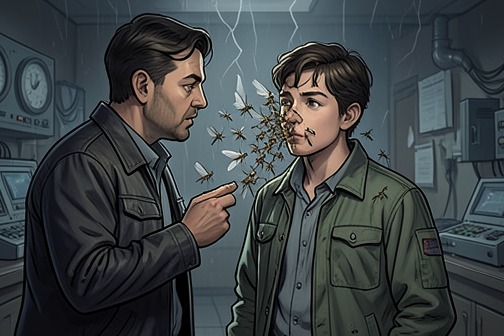
[Dan Helps Billy Freeman Discover His Aneurysm in Time](entity:event-recall-event-dan-billy-freeman-56a5d516550c) is a quiet medical emergency in which Dan Torrance acts on a warning that [Billy Freeman](entity:character-recall-character-billy-freeman-858124369582) cannot feel for himself. Billy insists that he is healthy; Dan reads the few flies on his face as evidence that there may still be time to intervene. A CT scan confirms an aortic aneurysm, converting Dan’s uneasy perception into a diagnosis that demands immediate care. The episode makes friendship practical: noticing, insisting, and getting someone to a doctor become acts with life-or-death stakes.
## The warning Dan recognizes
Billy does not want to take a day off or see a doctor. He says he feels well and points to having escaped the summer cold that usually catches him. His confidence is sincere, but it is not enough to reassure Dan, who has spent the previous night awake and refuses to accept Billy’s objections.
Dan’s insistence comes from a pattern he has learned to read. He has seen flies gather around people nearing death and has come to distinguish between a swarm that signals there is no hope, a dozen or so that may mean something can still be done, and only a few that leave time to act. Billy has just three or four. Dan has never seen flies at all on the faces of the terminal patients at [Rivington House](entity:location-recall-location-rivington-house-367db3c227b9), a contrast that helps explain why Billy’s case does not seem settled to him.
That judgment is sharpened by Dan’s memory of visiting his mother, [Wendy Torrance](entity:character-recall-character-7202f5c15127), nine months before her death. She had said she felt fine while hundreds of flies covered her, and had jokingly swiped at them as though they were not there. Billy’s much smaller number carries a different implication: not certainty of safety, but a narrow opening for action. Dan does not treat his perception as a medical diagnosis. He treats it as a reason not to wait.
## From resistance to examination
Dan brings Billy to [Casey Kingsley](entity:character-recall-character-casey-kingsley-14db1e2199c9), who supports the effort to get him examined. Casey asks Dan what kind of doctor Billy needs and considers whether the problem might be in his lungs, given his smoking. Dan believes instead that the trouble is in Billy’s abdomen. Casey takes that judgment seriously enough to direct Dan to contact [John Dalton](entity:character-recall-character-john-dalton-8f339fefeb9d) and emphasize that Billy needs to be seen promptly.
The exchange shows Dan working from knowledge that is difficult to explain in ordinary clinical terms. He cannot point to a symptom Billy recognizes as urgent, and Billy continues to protest that he feels fine. Still, Dan does not retreat from what he believes he has perceived. Casey helps turn that conviction into a course of action: get Billy to the right doctor rather than allow reassurance to become a reason for delay.
At the examination, Billy is sent for a CT scan. Dr. Fellerton says he is fairly sure what it will show and anticipates arranging for a vascular surgeon to operate early the next morning if the scan confirms his suspicion. Fellerton identifies an aneurysm as the likeliest explanation, while allowing that a tumor is possible. He emphasizes the urgency: the swelling is already about the size of a Ping-Pong ball, and a rupture away from a hospital could be fatal. The CT scan confirms the aneurysm, and by six that evening Billy is in a hospital bed. The evidence establishes the diagnosis and the need for rapid treatment, not the eventual outcome of surgery.
## A life at stake, and a debt between friends
In the hospital, Billy recognizes that Dan’s intervention may have saved his life. He says that if he gets through the operation, he will owe Dan, and offers to do anything he can in return. The conditional matters: Billy has just learned how serious the danger is, but still faces the operation ahead. His gratitude emerges in the space between the diagnosis and an outcome neither man can yet claim.
Dan refuses the position of benefactor. He tells Billy that he is the one who owes him, and remembers arriving by interstate bus in a snow flurry ten years earlier. What stayed with him was Billy’s small kindness: rather than telling Dan to keep away from something he had no business touching, Billy had asked whether he liked the little train. That welcome helped open the way to the life Dan now has. In the hospital, the debt runs in both directions: Billy offers repayment for the rescue, while Dan understands the rescue as a response to an earlier act of care.
The episode gives friendship a reciprocal shape without making the two acts equivalent. Billy’s earlier kindness was small and uncalculated; Dan’s present insistence is driven by a danger Billy cannot perceive. Yet Dan’s refusal to accept thanks as a one-way gift reveals how deeply he understands his own life as indebted to others. His help is not presented as a triumph over medicine: Casey helps direct Billy to care, Fellerton assesses him, and imaging confirms the condition. Dan’s distinct contribution is to persist long enough for those steps to happen.
## The pressure beyond the emergency
The immediate change is from apparent well-being to a confirmed, urgent medical threat. Billy had expected to avoid a doctor; instead, he is admitted for treatment after the scan. Dan’s perception does not itself repair the aneurysm, but it changes the circumstances in which Billy confronts it: he reaches medical care before a rupture occurs.
The relief of getting Billy examined does not remove every pressure from Dan’s life. That evening, after saying goodbye to Billy, Dan is on his way home from Lewiston and feels a powerful urge to stop at the Cowboy Boot, buy beer, and listen to country music. The timing gives the episode a sober counterpoint. Dan has helped his friend in a moment of danger, and Billy’s gratitude confirms the importance of their bond, yet Dan remains vulnerable to the pull of alcohol when life seems to be going well. The rescue is therefore both an affirmation of the work Dan can do for another person and a moment within the continuing effort to remain sober.
Event 21
Dan Torrance receives Abra’s psychic distress call
Dan Torrance’s reception of Abra Stone’s first psychic distress call breaks into an ordinary moment with [Billy Freeman](entity:character-recall-character-billy-freeman-858124369582) and makes an otherwise unseen connection physically overwhelming. Dan collapses, returns to consciousness under Billy’s anxious watch, and realizes that the cry in his mind came from a girl whose power exceeds anything he has encountered before.
## The Call and Its Immediate Effects
Dan is with Billy beside the latter’s engine when Billy asks whether he has time to get coffee. Before the conversation can continue, Dan’s head seems to explode. When he comes to, he is sprawled on the bench where Billy had been smoking. Billy sits beside him with his phone in hand, ready to call for help; he had thought Dan was having a stroke. Dan’s abrupt collapse turns the psychic contact into a bodily crisis, though he tells Billy he is all right.
The call leaves Dan pleading, “Please, [Tony](entity:character-recall-character-tony-5974d3962a4a), please.” Billy asks who Tony is. Dan says Tony was a good friend from his drinking days, but the explanation is an improvised cover, not a disclosure of what has just happened. Billy does not believe it: he suspects one of Dan’s flashes, recalling an earlier occasion when Dan knew about Billy’s condition. The exchange establishes both the privacy Dan keeps around his ability and Billy’s growing capacity to recognize it.
## Dan Recognizes an Unprecedented Presence
Dan understands that the experience is a psychic cry from a girl. He has known people with some degree of [the shining](entity:expression-recall-expression-the-shining-9ed9f640e588), including Billy, and had once believed himself alone until [Dick Hallorann](entity:character-recall-character-dick-hallorann-66545e4e2b2e) corrected him. But no previous person has reached him like this: the scream feels capable of tearing him apart. The force of the contact, rather than any clear message or explanation, is what distinguishes it.
The moment also brings Dan back to Hallorann’s teaching. He recalls the advice given to him as a troubled boy beside the [Overlook Hotel](entity:location-recall-location-0adbae40bf61): to give Hallorann a blast. That memory places the call within a history of psychic recognition and instruction, while leaving open what Dan can do in response to this new and much stronger presence.
## Significance
The scene makes contact legible through its consequences before its source is identified: Dan collapses, Billy fears a medical emergency, and a name from Dan’s past escapes before he can account for it. Billy’s suspicion confirms that the episode resembles Dan’s earlier flashes, but Dan’s inward recognition marks it as something beyond his known experience. The call thus introduces Abra’s extraordinary strength through its impact on Dan, not through an explanation of her abilities or the danger behind her cry.
Event 22
Dan and Abra’s First Meeting at the Anniston Library

Dan Torrance and Abra Stone’s first meeting at the [Anniston](entity:location-recall-location-289fc0d62743) Public Library turns a cautious exchange into a personal alliance: Abra can speak aloud about her shining and the danger surrounding her, while Dan accepts that protecting her means confronting that danger. The public setting makes their first contact deliberately open, but the conversation soon moves from tentative recognition to a promise with consequences.
## A meeting arranged in the open
The encounter follows Dan’s attempt to reach Abra by email. In the message’s subject line he wrote her name, then asked her to tell him what was wrong. The following Saturday, he waited outside the Anniston Public Library, an ivy-covered stone building near the middle of downtown. He sat in bright sunshine with a copy of the Union Leader open in front of him, but nerves kept him from taking in the page. The meeting was set for two o’clock, and the delay before Abra arrived left him with nothing to do but wait.
Abra came by bicycle, secured it in the rack at the foot of the lawn, and approached carrying two books strapped to its rear bumper. Her greeting was affectionate and unguarded: she called him Uncle Dan and gave him a hearty smack on the cheek. Dan had not expected that gesture. Her ease with him unsettled him precisely because it expressed confidence in his goodness before he had earned, or felt ready for, that confidence.
Their choice of the library lawn was part of the caution surrounding the meeting. Dan had told Abra that they needed to be careful, and she understood. They agreed to meet in public, and the library’s front lawn offered an open place in the center of town. The setting allowed them to meet face-to-face without pretending that the threat she described was harmless.
## Recognition and a name for [the shining](entity:expression-recall-expression-the-shining-9ed9f640e588)
The physical details Dan notices give the nervous encounter a human scale: Abra is tall for her age, with long legs, abundant curly blond hair tied back in a ponytail, and a light jacket marked with the Anniston Cyclones name. Her books and bicycle make her arrival unmistakably ordinary; the reason for the meeting is anything but. Dan initially has to orient himself to the girl he has been addressing through a psychic connection, while Abra approaches him with the familiarity of someone who already regards him as family.
When Dan asks for her last name, Abra gives her full name, Abra Rafaella Stone, and immediately connects that disclosure to the danger she fears. She hopes the lady in the hat never learns it. The moment shifts the conversation from playful familiarity to apprehension: her identity is something she believes must be protected from an enemy. For Dan, learning her name makes the threat more personal, not less.
They remain together on the library bench for forty-five minutes beneath the autumn sun. Abra experiences, for the first time, pleasure—indeed, joy—in the ability that had puzzled and frightened her. Dan has supplied a name for it: the shining. The name matters because it changes how she can understand her gift. What she had thought of as dark becomes something she can discuss with another person, and the meeting gives her room to feel less alone with it.
## [Bradley Trevor](entity:character-recall-character-bradley-trevor-7643b8abb94c) and the danger behind the meeting
Abra tells Dan that Bradley Trevor is dead, and that his killers hurt him before killing him. As she speaks, her composure falters; for a moment she seems much younger than her nearly thirteen years. She gathers herself with several deep breaths, then explains that she is relieved not to be alone with what she carries in her head. Dan listens as she recounts the encounter with Bradley that she remembers from two years earlier.
Her memory is incomplete but sharply focused on particular details: crisscrossing flashlight beams illuminating Bradley on the ground, and his screams. The people involved had called what they were doing an operation, but Abra understands it as torture. This distinction reveals the cruelty beneath the language used to disguise it. Her account is not a complete explanation of Bradley’s death; it conveys what she witnessed and why that memory remains with her.
Abra also tells Dan how she found Bradley again on the back page of [The Anniston Shopper](entity:object-recall-object-the-anniston-shopper-ac28175eec7e), among other missing children. She touched his photograph to learn about him. The photograph links her earlier psychic perception to the public record of missing children, while the memory of the beams and screams gives that image a terrible personal meaning. These disclosures make clear that the meeting is not simply a discussion of an unusual ability: Abra is bringing Dan evidence of violence and asking him to help her face what may follow.
## A promise with consequences
Abra understands that Dan’s forehead can reveal what he is thinking, and she raises the possibility of setting an alarm that would warn them if the threat came near. Dan says he does not know whether he can do it, but will try. The exchange shows how quickly the meeting moves between practical precautions and the limits of what either of them can control. Abra’s suggestion seeks a warning system; it cannot by itself remove the danger.
When she takes his hand and asks him to promise that the lady in the hat will not get her, Dan does not pull away. He makes the promise to comfort a child, yet recognizes its implication: keeping it would require making the threat go away. His private thought that Abra is getting him into trouble marks the change in his position. He has arrived nervous and uncertain; he leaves bound, at least morally, to act. The meeting’s significance lies in that turn, and in the trust that makes it possible: Abra no longer has to hold the danger entirely alone, and Dan can no longer treat it as someone else’s problem.
Event 23
Eleanor Ouellette’s Death and Dick Hallorann’s Visitation
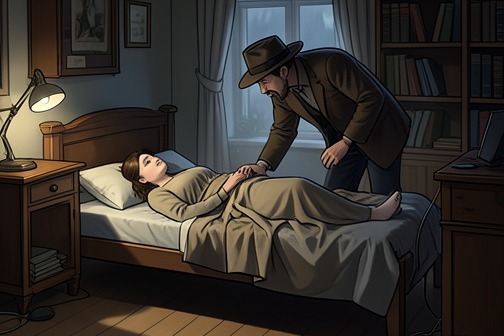
Eleanor Ouellette’s death and [Dick Hallorann](entity:character-recall-character-dick-hallorann-66545e4e2b2e)’s visitation turn a quiet bedside vigil into a warning that directs Dan Torrance toward Abra Stone’s defense. Eleanor dies after describing a procession of the dead; soon afterward, Dick speaks through her corpse, explains the danger posed by the True Knot, and tells Dan to go to his friends and pay a debt. The visitation links death not to an ending but to an urgent obligation among the living.
## Eleanor’s visions and death
Dan believes Eleanor has few, if any, visitors. In their conversation, however, she describes an endless parade of people passing before her: some smile or bow, and some speak. She recalls children among them, including a boy who fell into a well, and a woman who died by suicide. Dan senses no presence himself. He wonders whether his recent psychic contact with Abra has affected his ability to perceive, but considers dementia or a practical joke more likely explanations for Eleanor’s account.
Eleanor then insists that Dan wait. She predicts that the lights will announce an arrival, that disturbances may follow, and that a visitor will come through the door. Her warning is strikingly specific, but Dan has little reason to trust it: the hall door is already open, and he responds by offering her juice. Before she can finish answering, life leaves her face. Dan removes her dentures and waits for the final breath he knows as [the gasp](entity:expression-recall-expression-the-gasp-529dd68931a3), but it never comes. The expected sign of dying is absent, leaving the room suspended between Eleanor’s death and the promised arrival.
## The visitation through Eleanor
After Eleanor dies, the hall door swings shut and the bathroom door opens. One word comes from her dead mouth: Danny. Dan remains with her body, looking at her open eyes and hands before asking who has spoken. The answer initially carries uncertainty. Dan considers whether the speaker might be something impersonating Dick, or whether death has stripped his old friend of the warmth he remembers. But the room’s lights flicker and the water pitcher jitters; Dick’s familiar kindness and humor emerge in the exchange, and Dan recognizes him.
Dick tells Dan that he cannot remain long because being present hurts. His brief return is therefore limited, but it is purposeful. He knows about Abra and identifies her as someone like Dan. His observation that things come around again connects Dan’s own history of unusual perception with the danger now facing the girl, while also suggesting that Dan’s past has left him with a responsibility in the present.
## The warning about Abra
Dan asks what he should do about the danger to Abra. Dick identifies the threat as the True Knot, describing its members as sick and unaware of their condition. He explains that children who shine are prey to them and recalls what happened to the boy Abra calls the baseball boy. The danger is not simply that the group may kill Abra: it may also transform her or keep using her until nothing of her remains. Dick’s warning gives Dan a clearer understanding of the threat that had previously appeared through Abra’s distress and the strange woman’s interest in her.
The warning also changes the scale of the danger. Dick places the True Knot across a long history, recalling its members in settings that include desert caravans and eastern Europe, and compares their presence to a cancer on the land. Dan’s memories of the Overlook offer a grim point of comparison, but Dick distinguishes those dead presences from the still-living predators pursuing Abra. The threat is not confined to one haunted place; it moves through the world and targets children with abilities like Dan’s and Abra’s.
## A debt made urgent
When Dan asks what he is supposed to do, Dick gives him a direct instruction: get Abra what she asked for. The visitation does not provide a detailed plan, but it turns Dan’s concern into a charge to act. Dick then tells him to go to his friends, the people who know what he is, and reminds him that he still owes a debt. His final command to pay it makes the appeal personal as well as practical: Dan is being asked to draw on relationships and knowledge formed through his own life, not face the threat alone.
As Dick departs, red mist rises from Eleanor’s eyes, nose, and mouth, hangs briefly, and disappears. The room’s lights settle and the water becomes still. Dan is left with Eleanor’s corpse, but the encounter has made the deathbed a point of passage: Eleanor’s reported procession, her accurate warning of an arrival, and Dick’s brief return all converge on the immediate danger to Abra. The event’s decisive consequence is Dan’s newly explicit obligation to help her and to answer the debt Dick has named.
Event 24
Rose the Hat Intrudes into Abra’s Mind and Falls into Her Trap
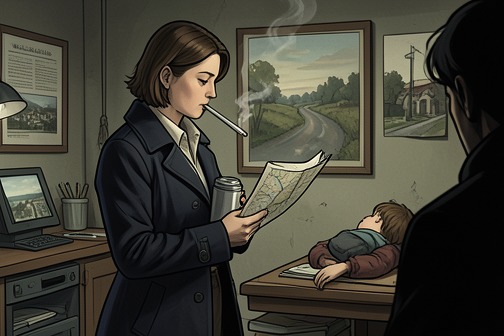
[Rose the Hat](entity:character-recall-character-rose-the-hat-b60da949127a)’s attempt to enter Abra Stone’s mind becomes a reversal of the hunter-and-target relationship: Rose believes she is following a trace into a child’s thoughts, but Abra has prepared the encounter as a trap. The intrusion ends with Rose forced to retreat, physically injured and newly aware that her confidence led her to underestimate Abra.
## Preparation and the route in
At one thirty on a Monday morning, Rose continued meditating while most of the True Knot slept. She held a computer-printed picture of downtown [Anniston](entity:location-recall-location-289fc0d62743), [New Hampshire](entity:location-recall-location-new-hampshire-5211f8695ec5), in one hand and a canister in the other. The canister held almost no steam, only a faint remnant, but Rose believed it would be enough to reach her target. Her preparation thus rested on two linked assumptions: that the remaining steam could carry her, and that she had found a usable path into Abra’s mind.
Rose released the last steam and inhaled it before fixing her attention on the picture. She imagined Abra asleep near a lane that Rose thought might be [Richland Court](entity:location-recall-location-ba195570edf5), while acknowledging that she did not yet know what the girl looked like. Instead, Rose relied on a different kind of recognition: Abra knew what Rose felt like, and Rose remembered what she had seen at [Sam’s Supermarket](entity:location-recall-location-sam-s-supermarket-79e81b267a87) the day before. That remembered glimpse became Rose’s marker, the point of entry she followed toward the child.
The search began with an auditory trace of supermarket music and the presence of a shopping cart. Rose followed those fragments as the darkness gave way to the supermarket aisle and then a hallway, signs that she believed she was nearing her destination. The sequence makes her approach seem gradual and methodical, but it also shows how much depends on her interpretation of what she encounters. She treats the fragments as a route she controls; the scene’s reversal reveals that the apparent access is part of a prepared encounter.
## The apparent child and the ambush
Rose first encountered Abra in a childlike form, riding a bicycle with training wheels that flickered in and out. The image suggested a dream of learning to ride without them. Rose took the child’s apparent innocence as cover for her own investigation, expecting to learn about Abra while the girl remained unaware of her presence. That expectation is central to the reversal: Rose believes she is the one observing, while Abra is already waiting for her.
Moving confidently, Rose opened a drawer. At once, an alarm sounded and spotlights came on around her. The drawer shut on her hand before she could pull it free, catching Rose completely off guard. The room’s sudden change turns her exploratory movement into a trap: what appeared to be an ordinary feature of the mental space becomes the mechanism that stops her and makes her vulnerable.
The child’s image then gave way to a young woman dressed as a warrior, with a dragon on her leather jerkin and a blue band holding back her hair. The bicycle had become a white stallion, and the warrior carried a lance. The transformation makes Abra’s concealed readiness visible to Rose. The story does not present the lance as the means of the counterattack; rather, the warrior image gives form to the danger Rose has belatedly recognized. Abra had lain in wait and meant to kill her, and Rose understood that her own vulnerable state could make the attempt succeed.
## The reversal reaches Rose
Rose fought back through force of will, using a blunt mental assault rather than the warrior’s imagined weapon. As she struggled, she also felt a fluttering sensation in her head, an indication that the encounter involved more than the trap and the threatened attack in the first room. She pulled her hand free just before the drawer could close on it again. The immediate escape did not end the intrusion: the flutter intensified, and Rose realized that Abra had entered another part of the mental space.
Rose found the girl in a room filled with file drawers. This discovery changes the meaning of the earlier movement through the supermarket and hallway. Rose had thought of herself as the intruder searching Abra’s mind; now she recognized that Abra had reached into Rose’s own mental territory. The encounter’s reversal is therefore not simply that Rose has been caught. The direction of access has changed, and Rose is no longer the only person navigating the other’s inner world.
As the sensation subsided, Rose initially tried to explain the failure by insisting that she could not have known. The narration corrects that self-exculpation: Rose had come to Abra and walked into a trap because she underestimated her. Her recognition identifies the error more precisely than the claim that the trap was unforeseeable. Rose had trusted her experience and her reading of the signs, but she had mistaken Abra’s apparent vulnerability for an absence of preparation.
## Aftermath and significance
Rose woke in her camper, where the canister lay empty on the carpet. Her [Sidewinder](entity:location-recall-location-sidewinder-c74f7389fea5) T-shirt was damp, and her hand was scraped, bruised, and swelling; she thought she might lose at least two fingernails. She had to steady herself on objects as she made her way to the door. The mental encounter had crossed back into her waking body, leaving a consequence she could not dismiss as an imagined defeat.
The clock on the dashboard showed ten to two: the entire episode had taken about twenty minutes. Rose left the camper, which now felt confining despite its size and luxury. Her retreat marks the immediate outcome: Abra has survived Rose’s attempt and has forced the older, more experienced intruder out of the encounter. Rose, in turn, leaves with evidence of the cost of underestimating her target. The scene establishes that Abra’s mind is not merely a place Rose can enter; it can also be organized to meet and resist her.
Event 25
The True Knot Murders Bradley Trevor
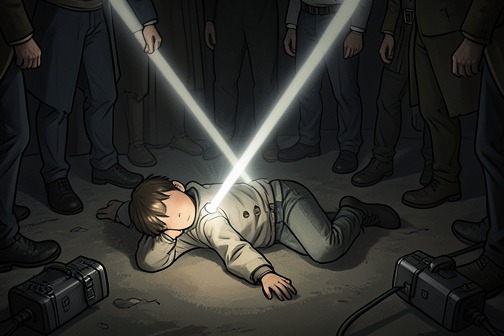
The True Knot’s murder of [Bradley Trevor](entity:character-recall-character-bradley-trevor-7643b8abb94c) is disclosed in fragments: first through Abra Stone’s memory of a child in distress, then through the discovery of his grave. The contrast between her uncertain recollections and the concrete evidence left behind makes the killing more than a past crime. It explains why the True Knot is dangerous to children who shine, and why helping Abra places other people in its path.
## Abra’s Recollection
Two years after her initial encounter with Bradley, Abra describes what she can remember to Dan Torrance. Her account is incomplete. The clearest image is of numerous flashlight beams crossing over Bradley as he lies on the ground, accompanied by his screams. She recalls that his attackers called what they were doing an operation, but understands it as torture. The distinction between the perpetrators’ label and what Abra believes she witnessed exposes the violence concealed by their clinical-sounding explanation.
The memory does not provide a full account of how Bradley was abducted, what happened during the operation, or how he died. Its force lies instead in the images that have persisted: the lights and the screams. Abra’s recollection is therefore both limited and consequential. She cannot supply a complete narrative of the crime, but she recognizes the suffering and the deliberate cruelty behind the name the perpetrators gave it.
Bradley returns to Abra’s awareness when she finds his photograph on the back page of [The Anniston Shopper](entity:object-recall-object-the-anniston-shopper-ac28175eec7e) among pictures of missing children. She touches the picture to see what she can learn psychically. Her question to Dan about whether he can touch things and receive images shows that this method is still unfamiliar to her as a shared practice, even though she has already used it to pursue information about Bradley. The newspaper photograph links the missing child to her earlier memory and gives her a new point of contact with his fate.
## The True Knot’s Threat
Dan explains that Bradley is not an isolated case. He identifies the True Knot as a group that hunts children who shine, and warns that such children can be killed, transformed, or kept and used until they are depleted. The possibilities differ, but each describes a threat to a child’s life and autonomy. Dan presents Bradley’s fate as evidence of what the group does to its victims, while his warning about Abra makes clear that the same danger now concerns her directly.
The group’s predation is tied to its appetite for what it calls steam. At a gathering in the [Kozy Kampground](entity:location-recall-location-kozy-kampground-63f22e45380d), the True Knot assembles around a canister, and [Rose the Hat](entity:character-recall-character-rose-the-hat-b60da949127a) distributes its contents as nourishment. This communal ritual gives the group’s survival a collective form: its members gather, receive, and consume together. It provides context for Dan’s account of the True Knot as a predator of children who shine, but it does not establish the precise details of Bradley’s killing beyond Abra’s memory of the so-called operation and Dan’s identification of the group.
Dan also tells [John Dalton](entity:character-recall-character-john-dalton-8f339fefeb9d) why he has disclosed the danger. John has seen Abra’s unusual abilities, but Dan wants him to understand that they are not merely psychic parlor tricks and that a real hostile force may be involved. If the True Knot discovers what they are doing, Dan warns, John and Dan could become targets alongside Abra. He makes clear that John can withdraw, acknowledging the risk rather than treating assistance as an obligation. Bradley’s murder thus changes the meaning of their search: they are not simply investigating a missing child but acting in the presence of a group that may retaliate.
## Discovery and Confirmation
The psychic trail leads Dan and John to Bradley’s burial place. At the grave, Dan carefully uncovers the remains while John turns away and sobs. Bradley was buried with his baseball glove held against his chest; the object is a specific, intimate remnant of the child whose photograph Abra had touched. It also confirms the connection between her psychic investigation and the physical evidence. The grave establishes that Bradley is dead and that his body was deliberately hidden.
The discovery does not undo the uncertainty in Abra’s memory or reveal every stage of the crime. Instead, it gives that memory a material counterpart. Dan and John rebury Bradley and cover the spot with broken asphalt, a practical response that protects the remains from exposure. Their care contrasts with the concealment imposed by the killers: the grave had hidden the evidence, but the recovery makes Bradley’s fate undeniable to the people searching for him.
## Consequences and Significance
Dan’s account to John underscores how the discovery alters the stakes. John must decide whether to continue with an undertaking that could make him a target; Dan offers him the chance to leave, while making clear that he and [Billy Freeman](entity:character-recall-character-billy-freeman-858124369582) will not be alone in the effort. Bradley’s death therefore becomes a warning that assistance to Abra carries danger beyond her own household. It also supplies a concrete reason for Dan to treat the True Knot as an organized threat rather than an explanation invented to account for a child’s unusual abilities.
The event joins three forms of evidence: Abra’s remembered flashes, her psychic response to Bradley’s photograph, and the physical confirmation at the grave. None alone supplies a complete account, but together they expose the essential truth: Bradley was a missing child whom the True Knot exploited and killed. His story gives urgency to the effort to protect Abra, while the buried baseball glove preserves the individuality of the victim within a pattern of predation. The murder is consequently both a recovered crime and a forecast of what the group may do to another child it has marked.
Event 26
Grampa Flick Dies of Measles
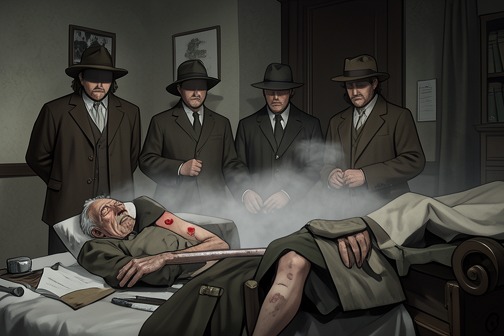
[Grampa Flick Dies of Measles](entity:event-recall-event-b6219e938389) marks the moment when the True Knot’s assumed immunity becomes a source of fear rather than reassurance. The oldest member’s prolonged illness and death reveal that a disease associated with ordinary children may have reached the group through its feeding practices, though the proposed route remains a suspicion, not a confirmed diagnosis. As [Grampa Flick](entity:character-recall-character-grampa-flick-519c98ad2a01) fades, [Rose the Hat](entity:character-recall-character-rose-the-hat-b60da949127a) and the others confront a limit to their apparent endurance—and the possibility that the danger is shared.
## The Possible Source
The suspected chain begins with [Bradley Trevor](entity:character-recall-character-bradley-trevor-7643b8abb94c), an eleven-year-old Iowa farm boy whose unusual intuition made him an exceptional baseball hitter. He seemed to anticipate pitches, and his knack for locating lost animals and objects extended beyond the field. On the day of practice, however, he was distracted and unwell. He had awakened with a headache and feverishness, felt that his surroundings and even his own thoughts were unfamiliar, and noticed a red spot on his arm. Rather than stay with the team, he walked home through the corn and emerged by a road where [Barry](entity:character-recall-character-barry-1c8c06153a31) Smith was waiting. The narrative does not establish the exact route by which the True Knot later encountered him, but the boy’s symptoms become crucial when the group searches for an explanation for Grampa Flick’s illness.
Much later, [Walnut](entity:character-recall-character-734b901330d3) recalls that the baseball-playing child from Iowa had also had spots. He had not considered the connection at the time because the True Knot believed it did not catch the diseases that afflicted ordinary people. Walnut proposes that a disease may have been carried in the steam and remained dormant before becoming active. The suggestion links the boy’s illness, the group’s consumption of steam, and Grampa Flick’s decline, but it is presented as a theory: no one demonstrates how the disease passed between them or establishes that the steam was its definitive source.
## Illness and Recognition
When [Crow Daddy](entity:character-recall-character-crow-daddy-e1d33d51f1cc) tells Rose that Grampa Flick is dying, members of the True Knot gather around his recreational vehicle. The gathering is unusually unsettled: the group is accustomed to the deaths of outsiders, not to illness and mortality among its own. Grampa Flick is gravely ill, and his appearance prompts Walnut to identify the marks as possibly consistent with measles. Rose initially rejects the diagnosis as incompatible with what the group believes about its resistance to childhood diseases. Walnut counters that an immunity held decades earlier may not last indefinitely, and that the illness could be part of a natural process. He cautions that a single case does not establish an epidemic, while raising quarantine as a necessary response if another case appears.
The uncertainty matters. Rose has treated the True Knot’s rare deaths as exceptions, generally attributable to a member’s own carelessness, rather than evidence of a shared biological vulnerability. Grampa Flick’s condition forces her to consider a different explanation. The possibility of measles does not merely name an illness; it challenges the group’s account of why its members endure. Rose’s resistance gives way to the practical crisis before her: she must watch the group’s eldest member decline without knowing whether the disease can be contained or whether others may already be at risk.
## Grampa Flick’s Death
On Monday evening, [Crow](entity:character-recall-character-crow-350aeee0ff10) summons Rose again, telling her that it is happening. The True Knot stands in a silent circle outside Grampa Flick’s vehicle. Rose embraces Andi before entering, where Walnut and the two reluctant nurses, Big Mo and Apron Annie, are present with Crow Daddy. Grampa Flick is cycling rapidly between visibility and disappearance. Each time he becomes transparent, more of him vanishes, and the intervals grow longer. His fear and pain make the change unmistakable to Rose: this is not one of the accidental deaths she had set aside as an exception.
Grampa Flick asks Rose to make the process stop. She tries to reach and comfort him with her mind, but finds no stable presence to connect with, only broken images. Walnut explains that medication can no longer help because Grampa Flick’s body is cycling too quickly for a dose to circulate; in his judgment, the group can only wait. Rose counts four more complete cycles. During the fifth, Grampa Flick disappears altogether. Afterward, the members remain beside the bed, unable to dispel the impression of absence or to treat the death as an ordinary departure.
The scene makes the loss communal as well as personal. Big Mo breaks down, and a voice outside begins the True Knot’s familiar chant. The others join in, including Rose. Their words affirm that the group is chosen, fortunate, and enduring. In the immediate aftermath, the creed functions as an act of collective mourning and an attempt to hold the community together. Its declaration of endurance now sounds against the evidence of a death that Rose can no longer explain away.
## Consequences and Significance
The suspected measles case changes the True Knot’s understanding of its own safety. Walnut’s warning about quarantine gives the group a possible response, but the episode offers no assurance that isolation will be enough. Later, Rose points out red spots on Big Mo’s arm and tells the others that the illness is in them. That later sign gives the earlier fear a broader reach: Grampa Flick’s death is no longer only an individual tragedy, and the threat cannot be dismissed as a problem confined to his sickbed.
The danger also reframes the group’s dependence on steam. Walnut’s idea that infection may have traveled in it remains unproven, but the hypothesis turns a resource associated with the True Knot’s continued existence into a possible vehicle of harm. When Dan asks whether measles is more serious for adults, John confirms that it can lead to pneumonia and blindness. The exchange underscores the stakes of the outbreak without establishing who else will become ill or what the disease’s final toll will be.
Grampa Flick’s death therefore marks a reversal in the True Knot’s self-image. The group’s members have treated longevity as evidence that they are beyond ordinary vulnerability; the cycling, the suspected disease, and the later appearance of spots among them expose that belief as precarious. Their chant insists that they endure, but the event leaves endurance newly uncertain: not a guarantee of immunity, but a shared claim tested by illness and loss.
Event 27
Dan and John Find Bradley Trevor’s Body in Iowa
[Dan and John Find Bradley Trevor’s Body in Iowa](entity:event-recall-event-176cc2ddf73c) is the discovery that turns Abra Stone’s psychic knowledge into physical evidence: at an abandoned industrial site near [Freeman](entity:location-recall-location-f2f37aa88ea1), Dan Torrance and [John Dalton](entity:character-recall-character-john-dalton-8f339fefeb9d) locate [Bradley Trevor](entity:character-recall-character-bradley-trevor-7643b8abb94c), a child murdered by the True Knot and buried with his baseball glove. The grave confirms the scale of the group’s violence, but the glove also opens a new line of connection and gives Dan a personal reason to pursue Bradley’s killers.
## The Search and Its Setting
Abra’s earlier vision had given Dan a set of recognizable details: a factory, a water tower, a shed, and a No Trespassing sign. When Dan and John reach the location, the place matches her account. The deserted works are a series of soot-gray concrete blocks beneath rusty corrugated roofing. One smokestack remains standing; two others have fallen. Broken windows, graffiti, a potholed service road, and a parking lot overgrown with stray corn mark the site’s abandonment. The water tower bears the words FREEMAN, IOWA, while the shed with its damaged roof supplies another point of confirmation.
The match changes the journey from a search guided by an uncertain vision into an investigation at a specific place. After leaving Adair, the men have encountered no other traffic. They turn off the rental car’s lights as they approach the closed gate, trying to keep the site dark. John tests the gate, first pushing and then pulling, but it does not open. Dan’s penlight reveals a broken padlock and heavy twists of wire. These details make the entrance a physical obstacle, but also confirm that the place is not an ordinary, accessible destination. The men have come to investigate a child’s death at a location concealed from routine view.
## Finding the Grave
Dan and John are aware of what Abra’s account implies: a boy was tortured and murdered, and his body was buried on the property. As they move through the site, Abra continues to guide Dan psychically. Her directions narrow the search, and the moment she identifies the precise spot reaches across the distance between them: Dan experiences the scene through her fear and tears, while Abra remains in bed, clutching her stuffed rabbit and shaking. The discovery is therefore shared in an unusual way. Dan and John perform the physical search, but Abra’s perception directs them to the body and makes the emotional cost of the search present to Dan.
The excavation takes about twenty minutes. Dan digs for the first ten, then hands the spade to John, who finds Bradley. John turns away and speaks through his hand, while Dan continues carefully, using a penlight to see into the grave. They uncover Bradley’s clothing and hands; his fingers are clasped around something. Dan tries to separate them gently, and one finger breaks. The scene establishes the condition of the burial without changing its central fact: Bradley was left underground with an object he had held close.
That object is his baseball glove. Its pocket is still full of insects, but the glove itself has been lovingly oiled. The contrast between the care visible in the glove and the grave in which it was placed gives the discovery its sharpest material meaning: a familiar possession has been carried into a burial that should never have happened. Dan is overcome and vomits onto the dirt removed from the grave, careful not to soil Bradley’s remains. John is audibly sobbing. The body is evidence of a crime, but the responses of both men make clear that the find is not merely investigative. They are confronting the fate of a child whose family may still be waiting for him.
## The Glove as Evidence and Connection
After examining the grave, Dan and John rebury Bradley and cover the spot with broken asphalt, concerned that animals might reach the remains. In the car, they discuss what to do next. John points out that Bradley has parents and grandparents, and probably siblings, who may still be wondering what happened. Neither man treats an anonymous report as a simple solution: they fear that a call made immediately after a stranger bought a spade in Adair could draw attention to them. Dan estimates that the body may have to remain undiscovered for a month; John considers that it might be two, allowing Bradley’s family more time before receiving news that will end their hope that he ran away.
Before leaving, Dan beats dirt from the glove against the car door and puts it on, placing his fingers where Bradley’s had been. The gesture turns the object from a recovered clue into a temporary point of contact. Dan closes his eyes and receives a brief impression that the child identifies someone called [Barry](entity:character-recall-character-barry-1c8c06153a31) as one of the good people. The information does not explain everything, but it gives Dan a lead: he believes the name refers to [Barry the Chunk](entity:character-recall-character-e6c9d3551243), a member of the True Knot whom Abra has identified. The glove also carries a more concrete clue. Its pocket is marked THOME 25, written in a child’s careful printing. Dan recognizes this as a reference to baseball player Jim Thome and the number twenty-five, concluding that Bradley had named the glove after his favorite major-league player.
## Consequences and Significance
The discovery changes Dan’s understanding of the danger from an abstract threat to a crime with a location, a victim, and evidence left behind. He had already believed Abra’s account; finding Bradley confirms that belief and strengthens his resolve to act against the True Knot. The baseball glove makes that resolve personal. Dan’s vow to pursue the group follows directly from seeing what was done to Bradley and recognizing that the child’s only apparent offense was possessing a quality the True Knot wanted to consume.
The event also links the search to Dan’s own history of containing the dead. As he considers what a person can live with, he thinks of [Mrs. Massey](entity:character-recall-character-mrs-massey-a1eee3010076), now stored away in the back of his mind, and says nothing about the haunting that has ended. That private comparison does not diminish Bradley’s fate; it places Dan’s response within a continuing struggle to carry unbearable knowledge without being undone by it. The grave, the glove, and the delay before informing Bradley’s family leave him with both a practical responsibility and a moral burden: he must protect the living investigation while acknowledging the child and the family still waiting for answers.
Event 28
Abra Reveals Her Shine and the Danger to Her Father
Abra Stone’s disclosure to her father, Dave Stone, changes what the family believes about her childhood abilities and makes an approaching danger impossible to dismiss. What begins as a strained kitchen conversation becomes a demonstration of the Shine, an explanation of years of concealment, and—once Dan Torrance and [John Dalton](entity:character-recall-character-john-dalton-8f339fefeb9d) arrive—a case grounded in the discovery of [Bradley Trevor](entity:character-recall-character-bradley-trevor-7643b8abb94c)’s body.
## The disclosure at home
Abra is already awake when Dave turns from the kitchen phone after speaking with [Lucy Stone](entity:character-recall-character-a16ed8c66dc9). Still in her pajamas, clutching her old stuffed rabbit [Hoppy](entity:object-recall-object-hoppy-875a8bbe8f7e), she looks pale and tired. Rather than go to school, she asks to speak with her father and says she may need to stay home for a while because she is in trouble. Dave’s first fear is that she might be pregnant. Abra recognizes what he is thinking and reassures him, briefly exposing how much more she can perceive than he had understood.
She explains that what she has done is called shining, not merely mind-reading. Her parents knew she still sometimes had premonitions, but Dave believed that the other abilities that had frightened them when she was younger had passed. Abra corrects that assumption: she can still do most of what once scared him, though not everything. The revelation is not simply that an old talent has returned. It is that the ability never entirely went away, and that Abra has been managing what her family could see.
When Dave struggles to believe that she can still perform the things she used to do, a drawer beneath the hanging pots flies open, shuts, and opens again. Abra can no longer lift spoons, but she chooses a display that is enough to command his attention. The drawer, an ordinary fixture in the kitchen, becomes proof that her claim is not just a report of remembered childhood incidents. Its movement makes the hidden ability present in the room, and turns her father’s uncertainty into an immediate encounter with evidence.
## Concealment and trust
Abra says she hid her abilities after realizing how much they worried and frightened her parents. She did so because she wanted to be a good daughter; she also feared that her friends would be frightened of her or stop liking her if they knew. Her confession therefore reveals a long effort to protect the people around her by concealing an important part of herself. Now, she says, concealment is no longer possible: Dan has told her she has to speak up.
The admission carries two kinds of strain. Abra is afraid of what is happening, but she is also aware that telling the truth will unsettle the family’s earlier understanding of her. After the drawer moves, she presses her face against Hoppy’s threadbare fur and cries. The gesture keeps the scene close to the child her father knows even as her words and demonstration force him to recognize abilities he had assumed were gone. Her fear is not presented as a rejection of her family; the explanation for her silence is that she loves them and has tried not to frighten them.
Dan later gives that concealment a personal context. He argues that Abra should not have to apologize for hiding her ability, and says he did the same thing because he loved his mother. He has not learned Abra’s reason through a prior discussion; he recognizes the pattern from his own experience. Abra responds with gratitude. His support helps shift the exchange away from treating her disclosure as wrongdoing and toward understanding the protective motive behind it.
## The danger becomes concrete
Abra tells Dave that there are bad people who may want to hurt her, but she does not yet explain everything about what they are. She knows that Dan and John are coming to help make the danger understandable. Dave initially cannot reconcile her warning with his assumption that her unusual abilities had faded. His response reflects how sharply her account conflicts with the family’s settled belief: he and Lucy had thought she had outgrown all but occasional premonitions.
The scale of the danger becomes clearer when Dan and John arrive. Dave has been waiting for an explanation, and his unease is sharpened by the fact that the two men are unfamiliar to him; he has also been thinking about how to respond when Abra eventually began dating. Abra brings out the back page of [The Anniston Shopper](entity:object-recall-object-the-anniston-shopper-ac28175eec7e), whose small portraits help connect her warning to the investigation of a missing child. Dan explains that two years earlier he received a message from Abra on a blackboard saying that the baseball boy was being killed. At the time, he did not understand what the message meant, and he is unsure whether Abra did either.
John reports the results of their trip to Iowa: they found the ethanol plant in [Freeman](entity:location-recall-location-f2f37aa88ea1) where Abra said it would be, as well as the boy’s body and his glove. The name Bradley Trevor was written on the glove’s strap; inside its pocket, Bradley had written the name of his favorite baseball player. These details make the danger more than a frightening possibility. Dave understands that the boy was murdered, while Abra describes the attackers as people who travel in campers and Winnebagos and use unusual, pirate-like names. Her gaze remains fixed on the towel-wrapped glove, and Dan senses both her fear of it and her desire to touch it.
## A family’s revised understanding
The conversation changes Dave’s role from a parent hearing an alarming claim into a participant who must reckon with evidence. Abra’s ability is demonstrated in his kitchen; her account is supported by Dan’s earlier blackboard message and by John’s report from Freeman. What Dave had regarded as a few remaining premonitions is now linked to a continuing power, a murdered child, and a threat directed at his daughter. The explanation does not make the danger fully comprehensible to him, but it makes disbelief untenable.
The disclosure also alters the meaning of Abra’s earlier silence. Her parents’ fear had helped create the conditions in which she learned to hide the Shine, while her attachment to them gave that concealment its purpose. Dan’s recollection of hiding his own ability from his beloved mother gives him a way to recognize this without accusing Abra of deception. The scene thus joins a private breach in family understanding to a wider crisis: Abra tells the truth not because she has ceased to be afraid, but because the danger has made keeping it secret unsafe.
Event 29
Abra Uses Bradley’s Baseball Glove to Identify the True Knot Attackers
Abra Stone’s reading of [Bradley Trevor’s baseball glove](entity:object-recall-object-bradley-trevor-s-baseb-80b10c9e2d1d) turns an object marked by a child’s murder into urgent intelligence: the True Knot is coming for her, and one of its members is carrying measles. The episode links Bradley’s unusual intuition, his illness, and his death to the danger now converging on Abra, while giving Dan Torrance and her family the first concrete account of who is approaching and why.
## [Bradley Trevor](entity:character-recall-character-bradley-trevor-7643b8abb94c) and the glove
Bradley Trevor had been an eleven-year-old Iowa farm boy and the best hitter on his Little League All-Star team. His skill exceeded ordinary strength: he seemed to know which pitch would come next, just as he could locate a new stock well, find a lost cow, or point his mother toward the engagement ring she had misplaced beneath the floor mat of the family Suburban. That intuition made his later use as a source of information more than a convenient plot mechanism; the glove belonged to a boy whose perception had already set him apart.
On the day the True Knot took him, Bradley had felt unwell, with a headache and a slight fever. At practice he seemed distracted, refused a soda, and felt an insistent need to leave the field. His mind did not seem quite his own, and he was unsure whether he was present or dreaming. Scratching absently at a red spot on his forearm, he walked home through the corn rather than jogging with the other boys. On Town Road D, [Barry the Chunk](entity:character-recall-character-e6c9d3551243) waited beside a parked vehicle. The details of Bradley’s fever and spots acquire new weight in Abra’s later reading: the glove carries not only the trace of the murdered boy, but a connection to the infection that threatens his killers.
## Abra enters the memory
When [David Stone](entity:character-recall-character-david-stone-f031300ed374) hesitates over the glove, Abra tells him she does not want to touch it, then asks him to hand it over anyway. She identifies the player named on it as Jim Thome and correctly explains that he belongs to the Six Hundred Club, though Dan Torrance doubts she has encountered the name before. The small, precise recognition establishes that she is drawing information from the object rather than guessing from what the adults have told her.
Abra then holds the glove to her face and smells its pocket. Dan remembers the bugs associated with it and has to restrain a wince, but the glove becomes more than an unpleasant relic. She holds it against her chest like a baby, breathes faster, and moans as her attention moves beyond the room. When David puts a hand on her shoulder, she shakes him off and insists that he let her continue. The adults wait while the reading takes hold; the glove remains in Abra’s grasp as her means of contact with Bradley’s attackers.
Her first clear conclusion is that they are coming for her. With Dan kneeling beside her and placing a hand over hers, Abra distinguishes the approaching party from the whole organization: only some of the True Knot are on the way. [Barry](entity:character-recall-character-barry-1c8c06153a31) is among them, accompanied by three others, perhaps four. She describes one as a woman with a snake tattoo and reports that the group regards ordinary people as rubes. Her information is fragmentary, but it changes the family’s position from suspicion of a remote threat to the knowledge that a particular party is approaching.
## The approaching danger
Abra senses that the group will arrive the next day, after stopping for something she cannot initially name. As she struggles to reach further into the vision, tears gather from effort rather than sadness. Dan lets go when she asks him to, and a snap of static accompanies the release. The piano plays a discordant run; ceramic Hummel figures on a nearby table rattle against one another. These disturbances make the psychic episode visible to everyone in the room, while also showing its physical cost and volatility.
With the glove on her hand, Abra abruptly identifies a crow and a doctor among the approaching people, then realizes that Barry is sick. She recognizes the illness as measles and connects it to [Grampa Flick](entity:character-recall-character-grampa-flick-519c98ad2a01), whose infection came from Bradley. Her reading supplies a chain of transmission that the True Knot had not understood when it killed the boy: Bradley carried the disease, Grampa Flick became ill, and Barry has now caught it. Abra also predicts that Barry will soon begin to cycle. Dan finally pulls the glove away; the piano stops and the figures fall still, one left almost tumbling from the table. The interruption ends the immediate display, but not the information she has brought back.
## What the reading reveals
After drinking a Coke, Abra explains that the True Knot may already be infected through Barry. She believes that the illness will not make the group turn back: they have too much to gain and, in [Crow Daddy](entity:character-recall-character-crow-daddy-e1d33d51f1cc)’s formulation, nothing to lose. The danger is sharpened by the possibility that the True Knot knows Abra’s street and perhaps her name or picture. Barry’s confused mind leaves her uncertain about how much the others know, but she understands their interest: if she cannot catch measles, her essence—or, as she corrects Dan, her steam—might cure or protect them.
The reading also locates the rest of the group. Abra names a campground whose name she is unsure of, near [Sidewinder](entity:location-recall-location-sidewinder-c74f7389fea5), and says that [Rose the Hat](entity:character-recall-character-rose-the-hat-b60da949127a) and the True Knot are there. That revelation gives Dan a second shock. He recalls [Dick Hallorann](entity:character-recall-character-dick-hallorann-66545e4e2b2e) speaking through Eleanor Ouellette’s dead mouth and telling him that the empty devils were in his childhood. Abra’s information makes the warning newly intelligible: the danger is connected to the place in Dan’s past, not merely to the people travelling toward Abra.
The glove reading therefore performs two kinds of discovery at once. It identifies the immediate attackers and exposes the biological consequence of the True Knot’s earlier violence. The organization’s apparent immunity to childhood diseases is no longer secure: members had already questioned whether Grampa Flick’s case could signal a natural process, and later red spots on another member confirm that the illness has spread within the group. For Abra’s family, the vision is a warning of a planned approach; for the True Knot, the stolen steam of one child has become the source of a sickness that threatens its members. The baseball glove is the hinge between those consequences, carrying Bradley’s exceptional perception into Abra’s present and turning the attackers’ own trail into evidence against them.
Event 30
Cloud Gap Ambush
The [Cloud Gap Ambush](entity:event-recall-event-cloud-gap-ambush-9c750cf87109) is the confrontation in which Dan Torrance and his allies intercept the True Knot’s team sent to abduct Abra Stone. A carefully prepared decoy and the defenders’ intervention turn the attackers’ expected capture into a failed assault, while the missing [Crow](entity:character-recall-character-crow-350aeee0ff10) leaves Dan with a new lead.
## Approach and Identification
Dan waits beside the [Cloud Gap](entity:location-recall-location-cloud-gap-8f919bf9d738) access road, seated at a picnic table with a Glock concealed in a picnic basket. When a Winnebago pulls into the parking lot, its passengers emerge one after another. Abra had warned that the True Knot traveled in campers and Winnebagos and used pirate-like names, but the arriving group initially looks ordinary: older men and a younger woman. The setting gives Dan reason to hesitate; it is a New England tourist spot at the start of leaf-peeping season, and he hopes [John Dalton](entity:character-recall-character-john-dalton-8f339fefeb9d) and [David Stone](entity:character-recall-character-david-stone-f031300ed374) will not mistake innocent visitors for attackers.
That doubt ends when Dan sees a rattlesnake tattoo on the woman’s arm, syringes in the hands of two members of the group, and a strange, unusually thin pistol carried by the man leading them. The leader stops at the birch poles marking the picnic area and demands to know where the girl is. Dan points instead to [Hoppy](entity:object-recall-object-hoppy-875a8bbe8f7e), Abra’s stuffed rabbit, making the decoy plain: the kidnappers have arrived, but the child they seek is not there.
## The Ambush Begins
The man with the unusual pistol tries to make Dan fall asleep. The effect takes hold abruptly: Dan’s eyelids grow heavy and his grip begins to slacken. Abra’s scream breaks through the attack before he loses consciousness. Startled, Dan fires from the basket, but the shot goes wild; the sudden noise also shakes off the sleepiness.
Dave then emerges from the woods and fires at the group. Most of his shots miss, but one strikes [Walnut](entity:character-recall-character-734b901330d3), the True Knot’s doctor, and drops him. The attackers’ arrival has become an open confrontation, with Dan and Dave resisting the party that came expecting to take Abra without opposition.
## Resistance and Reversal
The attackers’ apparent advantage lasts only moments. The man with the unusual pistol fires at Dan, but the weapon’s dart strikes Hoppy rather than its intended target. Dan returns fire from the wrecked picnic basket and brings down the man in the chinos. The decoy has absorbed the first shot, and the would-be kidnappers are no longer facing an unresisting target.
[Snakebite Andi](entity:character-recall-character-snakebite-andi-b8fb1b112f20), the last of the group still standing, charges Dave Stone with a hypodermic needle. Dave appears unable to respond, so John Dalton rushes from the woods and drives him into her path. As they fall, the needle is dislodged; John then strikes Andi with the stock of [Billy Freeman](entity:character-recall-character-billy-freeman-858124369582)’s deer rifle, stopping her attack. His immediate distress at having hit her so hard contrasts with the group’s intended violence toward Abra and the confidence with which they had approached the picnic area.
Dan directs John’s attention to Walnut, who has been struck in the neck. Rather than simply remaining down, Walnut begins to cycle rapidly: his clothing and body seem to shrink inward and swell back, while the visible blood appears and disappears. The disturbance makes the True Knot’s unusual condition unmistakable to the defenders. By the time Abra’s panicked psychic message reaches Dan, two of the men who pursued her have vanished, leaving only their clothes; Snakebite Andi remains, badly hurt and still cycling.
## The Missing Crow and the Aftermath
Snakebite Andi survives the first exchange long enough to speak with Dan, though her condition continues to change as she cycles. She accuses the defenders of defeating the True Knot through an unexpectedly organized resistance. Dan answers by identifying David Stone as Abra’s father, but Andi dismisses the personal connection: to her, he is simply another man. Her response exposes the distance between the ordinary family bond at stake and the group’s predatory view of its intended victim.
Dan asks where [Crow Daddy](entity:character-recall-character-crow-daddy-e1d33d51f1cc) is. Andi cries that he got off in [Anniston](entity:location-recall-location-289fc0d62743), giving Dan a lead beyond the ambush site. Her answer also confirms that Crow Daddy was not among the attackers Dan and his allies intercepted. The revelation redirects attention from the immediate fight to the possibility that the missing member of the True Knot remains elsewhere.
Thinking of what the True Knot had done to [Bradley Trevor](entity:character-recall-character-bradley-trevor-7643b8abb94c), Dan feels an overwhelming urge to retaliate against Andi. Instead, he recalls a child who had reached for leftover soda, and recognizes that the memory does not make Andi comparable to the child or justify his anger. The fury gives way to sickness and emptiness. This inward turn matters amid the defenders’ use of force: Dan has won the immediate confrontation, but he does not treat victory as permission to abandon restraint.
Andi continues cycling until she disappears. Dan then walks carefully back to John Dalton and David, carrying Hoppy without realizing he has picked up the stuffed rabbit. His head is clearing, but the relief is mixed: the attackers have been stopped, while Crow Daddy’s absence and the information about Anniston leave the danger unresolved.
## Resolution and Residual Threat
Snakebite Andi’s final words return to her contempt for men and for the ordinary people who have defeated the True Knot; then she disappears as her cycling ends. Dan walks back to John Dalton and David Stone slowly, steadying himself against the picnic tables. He is carrying Hoppy without having noticed he picked up the rabbit, a small, unplanned return to the decoy around which the ambush had turned. His head is clearing, but the scene closes on no uncomplicated relief: the immediate assault is over, while Dan’s precarious balance and Crow Daddy’s absence leave its consequences unsettled.
Event 31
Crow Kidnaps Abra
[Crow](entity:character-recall-character-crow-350aeee0ff10)’s kidnapping of Abra Stone begins with a moment of recognition on [Richland Court](entity:location-recall-location-ba195570edf5) and ends with her unconscious in his truck. Believing that the True Knot’s survival depends on capturing her, he exploits [Billy Freeman](entity:character-recall-character-billy-freeman-858124369582)’s trust, overcomes Abra after her attention has been diverted, and carries her from her home. The apparent success is shadowed by signs that the group’s attack has become an ambush—and by Abra’s warning that Crow’s friends are already dead.
## Identification on Richland Court
Crow has left the men in the Winnebago pursuing the wrong lead. Standing half-hidden behind an old oak, he watches two girls emerge from a nearby house and recognizes them from photographs on Billy’s computer. One is Emma Deane; the other, wearing black pants, is Abra. The sight resolves the immediate question of where the hunted girl is, but Crow still needs to determine which of the two is the target.
He gets his answer by watching Abra cross the street. Billy, sitting in the pickup, raises his hands in a questioning gesture. Abra gives him a thumbs-up before continuing, a small exchange that Crow reads as confirmation: she is the girl under guard. The gesture is more decisive than a photograph because it shows the connection between the girl and the waiting man. Crow concludes that Billy is her protector and that the other men have been sent on a wild-goose chase.
Crow reaches for his phone, intending to call [Snakebite Andi](entity:character-recall-character-snakebite-andi-b8fb1b112f20), but the call fails. [Cloud Gap](entity:location-recall-location-cloud-gap-8f919bf9d738) has no cell-phone towers, a practical inconvenience that leaves him isolated from the others just as he decides to act. He turns off the phone, thinking that for the next twenty minutes he has no one he wants to talk to, including Rose. The separation is both tactical and revealing: Crow treats the abduction as his own mission and responsibility, rather than waiting for instructions or support.
## Billy Is Incapacitated
Crow approaches Billy with the genial, trustworthy manner he uses when arranging places for the True Knot to stay. He carries a folded copy of [The Anniston Shopper](entity:object-recall-object-the-anniston-shopper-ac28175eec7e) and keeps one hand in his jacket, where he has four loaded syringes, two in each pocket. The newspaper and practiced smile help him present himself as an ordinary stranger asking for assistance; the concealed needle makes that performance a trap.
Billy is nervous and on edge, but Crow’s cheerful voice and bright smile briefly persuade him. As Billy reaches toward the open glove compartment, Crow sticks him in the side of the neck. Billy thinks he has been bitten by a bug, then slumps sideways with his eyes rolling back. The speed of the attack matters: Crow does not overcome Billy in a struggle or give him time to call for help. He turns an ordinary request for directions into a way to approach and drug the person standing between him and Abra.
Crow pushes Billy across the seat and gets behind the wheel. When the truck radio comes on loudly, a terrible white flash briefly blinds him. His telepathic ability is limited, but he feels the True Knot’s connection as a bond among members of a single organism; one of them has just died. Another white flash follows. Crow understands that Cloud Gap was not merely a diversion but an ambush, and he suspects Abra is responsible. The realization interrupts his initial plan to drive straight to her house: he returns Billy to the driver’s seat, checks him for a weapon, and fastens his seatbelt so the unconscious man cannot fall forward and sound the horn.
## The Capture Inside the House
Crow walks to the Stone home without hurrying. He watches for a face at a window or even a twitch of a curtain, ready to run if anyone has noticed him, but sees no movement. His immediate desire has shifted. Though he still believes he might complete the abduction, the flashes and the death they signal weigh more heavily; he wants to reach the girl who has caused the True Knot so much trouble.
He enters through the rear door by snapping the spring lock with a credit card. The route matters: the backyard ends at a high fence and a river, while his truck is on the street, so he has no intention of leaving by the same way. Inside, Abra is mentally reeling from her encounter with Rose and has not recovered enough to repel him with her mind. Crow appears in the kitchen doorway, greets her, and leaps. Rather than trying to fight him with psychic force, Abra turns and runs for the front door.
Crow catches her as she reaches for the thumb lock, wraps an arm around her throat, and pulls her back. Her first attempts to push him away with her mind are confused and weak. He injects her just below the collarbone, but she struggles hard enough to knock the syringe from his hand. It falls and rolls across the floor. The interruption prevents him from controlling the full injection, yet he has already delivered enough of the drug: Abra’s hold on his mind slips away, her hands fall, and she stares at him with dazed, floating eyes.
Even in that state, Abra manages a smile and tells Crow that the monsters he calls his friends are dead, beginning to say more before the scene cuts away. Her words sharply contradict his belief that capture will restore the True Knot’s advantage. Crow tells her that they are going for a ride and that she will meet exciting new people, presenting the kidnapping as if it were an excursion rather than an act of violence. The contrast between his jaunty reassurance and her warning leaves the outcome unsettled even as he gains physical control.
## The Truck and the Reversal
Crow carries Abra through the kitchen and into the empty garage. Both parents are away, he supposes, perhaps at Cloud Gap; he does not yet know who has been helping her and postpones dealing with that question. He places her limp body beneath a worktable holding her father’s tools, opens the garage door, and steps outside wearing the ingratiating Henry Rothman smile that has helped him pass among ordinary people. Looking as if he belongs is, in his experience, a means of survival.
He returns to the truck and moves Billy to the middle of the bench seat. Crow jokes about the old man becoming familiar with him, then drives the red pickup into the Stone driveway. The capture produces a rush of energy: despite the danger and the deaths signaled by the white flashes, Crow feels vividly alert and convinced that he has won. He thinks of Abra as a love offering for Rose and strikes the dashboard in triumph.
Before leaving, he removes Abra’s backpack and leaves it beneath the worktable. He lifts her into the passenger side and buckles both her and Billy in. He has considered killing Billy by snapping his neck, but decides that the unconscious man may be useful. Checking for a pulse, he finds it slow but strong; Abra is breathing too, her breath fogging the passenger window. Crow has therefore taken both the girl and her guardian, but not killed either of them. The event closes on a precarious practical victory: Abra is in his custody, Billy is incapacitated, and Crow’s confidence persists despite his awareness that the True Knot has been ambushed and that his captive may know more about the cost than he does.
Event 32
Abra and Dan's Mind-Swap Escape
Abra and Dan’s mind-swap escape turns an attempted abduction into a psychic counterattack: with Abra drugged and [Crow Daddy](entity:character-recall-character-crow-daddy-e1d33d51f1cc) in control, Dan enters her mind, takes her place, and uses the power she has shown him to help stop [Crow](entity:character-recall-character-crow-350aeee0ff10). The exchange depends on their connection, but its decisive force comes from Abra’s knowledge and Dan’s willingness to follow her into unfamiliar territory.
## The Link and the Exchange
As [John Dalton](entity:character-recall-character-john-dalton-8f339fefeb9d) drives south on Route 16, Dan makes no attempt to call Abra. Unsure whether a direct call would work, he instead opens his mind and listens. He experiences the effort as wearing extraordinarily powerful headphones: beneath the world’s noise lies what he takes to be a steady rushing current of human thought. He waits for Abra’s voice without expecting to hear it, then picks her up after the Suburban passes the first tolls on the Spaulding Turnpike, about sixty miles from [Boston](entity:location-recall-location-boston-aded649f4602).
Abra reaches him in distress. Drugged and being held by Crow, she communicates the need for help and gives Dan the instruction that makes the rescue possible: they must swap places. Dan has never attempted anything like it, and initially cannot make sense of her request. Abra, though weak and disoriented, visualizes a stone wheel that links their minds. She can keep the connection open, but does not have enough strength to turn it herself; Dan can enter her mind while she enters his, though he remains mostly aware of his own surroundings in the Suburban.
The exchange is not a clean disappearance from one body into another. Dan senses the Suburban’s roof turning away and fears that he may become trapped in Abra’s mind, unable to return. Then his surroundings resolve into a dingy bathroom with blue floor tiles and a sign warning that only cold water is available. He is sitting on the toilet in Abra’s body when Crow forces his way inside, believing he has found the captive who was supposed to be changing her tampon. The scene’s abrupt shift—from the moving car to the shabby bathroom—marks the practical result of the mind-swap: Dan has reached Abra, but now has to meet the danger from her side.
## Crow’s Capture and the Reversal
The exchange leaves the two minds on opposite sides of the abduction: Dan Torrance is inside Abra Stone’s body, in Crow Daddy’s reach, while Abra is in Dan Torrance’s body with John Dalton. As Crow drags Dan out of the bathroom, Dan tells John to keep driving. Crow then forces Abra’s body into his truck beside the sleeping [Billy Freeman](entity:character-recall-character-billy-freeman-858124369582) and threatens the captive: if she lies to her father again, he will kill Billy slowly rather than use the drug. Dan answers quietly, concealing the fact that the voice Crow hears is not quite Abra’s. Crow recognizes the difference but cannot understand it; the trick has been made possible by what [Rose the Hat](entity:character-recall-character-rose-the-hat-b60da949127a) unwittingly showed Abra.
Dan has no familiar method for using Abra’s power. As Crow drives through rural Vermont, he searches his mind for the special switches he associates with her abilities, unsure whether they are real or merely part of a mental exercise. He pulls them all. The counterattack first takes hold as a cold, tightening band around Crow’s eyes, then numbs his cheek and ear. Looking at the girl beside him, Crow sees eyes that seem older and wiser than Abra’s; Dan, acting through her body, commands him to stop the truck.
Crow tries to raise his gun, but his hand feels plunged into freezing water and the weapon grows impossibly heavy. His foot leaves the accelerator; the truck veers off the road and slows along the soft shoulder, its wheels edging toward the ditch. Even as Crow struggles to regain control, Dan’s attack presses inward. Abra calls for Billy’s help, and Billy wakes, briefly distracting Crow. The gun turns back toward Crow as the cold rings tighten around his eyes.
Crow decides to kill Abra, but Billy slams into him before he can aim again. When Crow tries to bring the gun down, hands close over his, and the force behind Dan’s resistance surges beyond what Crow had been fighting. Crow’s wrists snap as the weapon turns toward him. A brilliant flash follows; four seconds later, nothing of Crow Daddy remains but his clothes. The attempted abduction has become a lethal reversal, achieved through Abra’s knowledge, Dan’s willingness to act through her, and Billy’s timely intervention.
## Aftermath and the Return
In the back of John Dalton’s Suburban, Dan speaks four clear words in Abra’s voice: “I’ll come to you.” The voice carries the exchange’s consequence beyond immediate escape: even after the minds have crossed, Dan can answer Rose the Hat’s challenge through the bond that connected him to Abra. The promise turns survival into a commitment to confront the threat rather than merely flee it.
When Abra complains that the drink is soda, Dan uses it to wake Billy Freeman, spraying orange pop directly into his face. Billy coughs awake, and Dan insists he stay conscious rather than return to sleep. The abrupt, practical gesture marks a shift from the perilous mental struggle to the work of getting everyone safely onward.
Billy recognizes the driver as Dan, who confirms his identity. Asked where the hijacker is, Dan answers that Crow is dead; when Billy asks about the body, Dan says it is gone and declines to explain further. The exchange ends not with a full account of the psychic violence but with its stark result, while Dan admits through his exhaustion and disorientation that he wants the ordeal over.
## Crow’s Last Attachment and the Shock Beyond the Truck
As the gun turns against him, Crow Daddy’s final thought reaches toward Rose the Hat in a broken declaration of love. The psychic struggle ends not only his attempt to control Abra’s body but his life; four seconds after the flash, only his clothes remain. His last instant thus preserves the attachment that has bound him to Rose even as the force behind that bond can no longer save him.
The death is felt beyond the roadside encounter. In a nearby Bounder, Steamhead Steve, Baba the Red, Bent Dick, and Greedy G abandon their card game and rush outside when the shrieks begin; the True Knot as a whole is already on edge. Crow’s destruction is therefore both an escape from immediate danger and a shock to the larger group pursuing Abra.
Event 33
The True Knot's Measles Crisis and Schism
The True Knot’s measles crisis and schism expose the cost of the group’s dependence on steam: what its members had treated as protection from ordinary human illness proves uncertain, and the fear of infection fractures their solidarity. A disease associated with children becomes a threat to the group’s oldest members, prompting [Rose the Hat](entity:character-recall-character-rose-the-hat-b60da949127a) to demand renewed unity even as the True Knot begins to divide.
## Background and suspected source
[Bradley Trevor](entity:character-recall-character-bradley-trevor-7643b8abb94c), an eleven-year-old farm boy and outstanding Little League hitter, seemed to know what pitch would come next. His knack extended beyond baseball: he could locate a new stock well, find a lost cow, and tell his mother where she had misplaced her engagement ring. On a day when he had been allowed to practice with the local All-Star team, however, he felt feverish and headachy. He also sensed that he no longer wanted to be on the field and that his mind was not quite his own. A red spot marked his forearm. After practice, he left for home on foot, walking unusually slowly; at Town Road D, [Barry](entity:character-recall-character-barry-1c8c06153a31) was waiting beside a vehicle.
The later outbreak makes that encounter consequential. When [Grampa Flick](entity:character-recall-character-grampa-flick-519c98ad2a01) becomes gravely ill, the members connect his condition with Bradley, whose skin had shown spots when the True Knot took his steam. One member recalls that detail but had not recognized its possible importance at the time. Nut proposes that the illness may have remained dormant in the steam and emerged years later. That explanation is speculation within the scene, not a confirmed account of transmission; Nut also cautions that a single case does not establish an epidemic. Still, he warns that another case would require complete quarantine.
## Illness becomes a group crisis
The True Knot’s assumptions about immunity begin to fail under pressure. Nut argues that immunity to childhood diseases in the past does not guarantee continued protection, and raises the possibility that the change could be part of a natural process. The others struggle to reconcile that explanation with the sight of Grampa Flick sick in bed. Their alarm is sharpened by the apparent absurdity that an illness children rarely catch could be killing the group’s oldest member.
At the camp, Steamhead Steve, Baba the Red, Bent Dick, and Greedy G abandon a game of canasta when the cries begin. Members emerge from their campers and recreational vehicles, then stop as they see Rose standing under the security lights around [Overlook Lodge](entity:location-recall-location-overlook-lodge-c0367652c1ea). She is distraught over [Crow Daddy](entity:character-recall-character-crow-daddy-e1d33d51f1cc)’s death and threatens to kill Abra, whom she blames. After collapsing in grief, Rose is approached by [Silent Sarey](entity:character-recall-character-silent-sarey-47dfe11e8463). Rose first pushes her away, but Sarey returns; Rose then embraces her, and the two women help each other stand. The moment joins personal bereavement to the larger emergency: both women have lost someone dear, while the group watches its leader struggle to command herself.
## Rose’s attempt to restore unity
Rose’s grief quickly turns into a test of loyalty. Steamhead Steve says that five members have been lost in one day, more than the True Knot has ever suffered, and cautiously suggests leaving Abra alone. Rose reads the group’s fear as a desire to retreat. The members have enjoyed years of easier hunting, she recognizes, but now face an opponent with extraordinary steam who knows what they are and what they do. Their hesitation makes her feel abandoned, and her anger pushes them farther away rather than bringing them together.
She makes the infection visible by seizing Big Mo’s arm and showing the red spots on it. When Sweet Terri Pickford points out that she has no marks, Rose counters that the absence of symptoms now offers no assurance about what may happen later. She invokes Nut’s suggestion that Abra may be their only chance to eliminate the sickness before it spreads; nobody offers a better answer. The argument gives Rose a way to recast the immediate danger as a common problem requiring action, though the evidence does not establish that Abra can cure the illness.
Rose orders the group to wait until Deez, Annie, and Dirty Phil return, then take the largest quantity of steam they have ever taken and empty the canisters. She also calls for the True Knot to gather in a circle and repeat its creed. The ritual language is an appeal to an identity built on endurance, but the scene shows that reciting it cannot erase the fear. Rose believes terror is weakening the group as surely as the disease is.
## The schism and Rose’s new plan
The fractures become unmistakable later that night. Rose hears vehicles start at quarter past two and again at twenty to four. Some members leave with Steamhead Steve and Baba the Russian; the Little twins, Pea and Pod, depart with Sweet Terri Pickford. Big Mo asks to go but is refused because she is carrying the disease. Rose could stop the departures, yet lets the members discover life on the road without the group’s protection. She also intends to have Toady Slim cancel their credit cards and empty their bank accounts, using his technical ability to penalize their break with the True Knot. Her judgment that Toady will stay marks the difference she draws between defectors and the members she still trusts.
Dirty Phil, Apron Annie, and Diesel Doug do not return with the others. They have voted to head south; Deez says Rose can no longer be trusted and that it is time to leave the True Knot. Rose regards the split as dangerous but also sees it as a way of thinning the group: she expects the roughly twenty-five who remain to be stronger once the weak or sick have gone. She mourns Crow Daddy and acknowledges that nobody can simply take his place, though she identifies [Token Charlie](entity:character-recall-character-token-charlie-51a41cbdbab0) and other loyal members as people who can help fill the gap.
Rose’s final resolve combines the two threats rather than separating them. She expects the remaining stored steam to go farther with fewer members and believes the group must become strong again. She no longer imagines keeping Abra prisoner; instead, she plans to confront her with the remaining True Knot and take her steam. The crisis thus ends not with proof that the illness has been contained, but with a reduced and divided group preparing to pursue the person Rose sees as both an enemy and a possible answer to the sickness.
Event 34
Concetta's Final Exchange with Dan
[Concetta Reynolds](entity:character-recall-character-concetta-reynolds-71d47aef8eb8)’s final exchange with Dan Torrance is both a bedside farewell and a freely given transfer of help: she returns briefly to consciousness, recognizes Dan, and agrees to give him what Abra Stone needs before he waits with her for her last breath. The scene makes their intimacy tangible through a handclasp, a rosary, and the image of a well, while presenting dying not as an interruption of relationship but as a passage shared between the living and the departing.
## Room Nine and the return
Concetta lies in Room 9, at the end of the hospital hall. Her name is on the door, but the slot for medical orders is empty and the monitor offers no hopeful signs. Dan recognizes the hospital’s air freshener and antiseptic, as well as the sharper smell of mortal illness, which seems to sound in his head like a violin limited to one note. The room’s photographs preserve another register of life: many show Abra at different ages, and one recalls the famous birthday gathering known as the [Day of the Spoons](entity:time-recall-time-day-of-the-spoons-21f1b1004b31). The contrast between those images and Concetta’s failing body places the family’s history around her bed even as her life nears its end.
Concetta is described as a skeleton-thin woman, her once olive-toned skin yellowed, her remaining hair nearly lost against the pillow. A saline drip is the only treatment entering her body; Dan knows the hospital pharmacy has nothing that can reverse what is happening. He straightens her displaced cannula and takes her hand. When her breathing catches, he silently calls her back, thinking of Abra’s need and of his own wish that Concetta return. Her eyes move beneath their bruised lids, then slowly open. Their first vacant look gains perception, a change Dan recognizes as the miracle of consciousness returning. The scene holds the uncertainty of that moment: he cannot explain where consciousness comes from or where it goes, and he regards death as no less miraculous than birth.
## Recognition and the bargain
Concetta’s hand tightens around Dan’s, and she smiles timidly. She asks, in Italian, whether he is Daniel Torrance and whether they are both dead, as if the encounter has already crossed the ordinary boundary between life and death. Their conversation is brief and illuminating. She speaks mostly in Italian, and at last raises a hand with effort to caress his stubbly cheek. The gesture makes recognition physical: after waking into a room of illness and family photographs, she confirms their bond through touch.
Dan asks whether she is ready. Concetta answers that she is. He tells her there is nothing to fear, and she calls him a gift from God. He hopes she is right, then asks whether she will give to him what he needs for Abra. Concetta agrees. The exchange is not framed as an order or a taking: her consent comes plainly, and Dan answers with a promise to give to her as well. His image of the two of them drinking from the well together makes their agreement reciprocal, even though she is the one approaching death and he is the one who will carry help back to Abra.
Concetta closes her eyes. Dan assures her that she will sleep and wake to find things better; she answers inwardly that she knows. The strength between them is greater than what Dan felt when [Charlie Hayes](entity:character-recall-character-charlie-hayes-638aa7d439ef) died. As he gently clasps both her hands, the smooth pebbles of her rosary press against his palms. The rosary is at once a concrete object between them and part of the scene’s quiet devotional language: the exchange joins touch, faith, and the power Dan experiences without making his uncertainty about consciousness disappear.
## The well and the life passing through
As their connection intensifies, the scene moves through images of Concetta’s life rather than reducing her to the body in the hospital bed. Dan senses lights being turned off one by one, while the image of a little girl in a brown dress and sandals draws water from a cool well in Italy. She resembles Abra. A dog barks and rolls in the grass; the remembered words identify it as Ginata. The well returns the reader to the promise Dan has made, but now it belongs to a landscape and a life extending beyond the hospital room.
Concetta appears across different ages and circumstances: sixteen and in love; thirty, writing a poem at a kitchen table in a hot Queens apartment while children shout below; sixty, standing in the rain and looking up at falling lines of silver. She is also her mother and her great-granddaughter. These shifting images do not provide a full account of her biography, but they make her identity larger than the final illness visible to Dan. Her approaching death is described as a great change and a great voyage, while the earlier well image gives that passage a continuity of memory, kinship, and renewal.
Dan kisses her cool forehead and tells her she only needs to sleep. He then waits. The intimacy of the scene is measured by its stillness: the hands remain joined, the final reassurance has been given, and nothing can replace the wait for the breath itself. Concetta’s last breath comes. Dan is still holding her hands when [Lucy Stone](entity:character-recall-character-a16ed8c66dc9) enters, followed by her husband and Abra’s pediatrician. The arrival of the family breaks the quiet bedside vigil and brings the scene’s private exchange back into the urgent, painful world of those left behind.
## Death, gift, and the novel’s rituals
The exchange is significant because it distinguishes a freely given passage of help from the True Knot’s predatory idea of nourishment. At the [Kozy Kampground](entity:location-recall-location-kozy-kampground-63f22e45380d), [Rose the Hat](entity:character-recall-character-rose-the-hat-b60da949127a) opens a canister of steam taken from Richard Gaylesworthy, and the gathered True breathe it in under the command to take nourishment and endure. The mist descends over their heads; some swoon, and Rose feels physically renewed. The child’s essence is consumed until it is gone. Concetta’s agreement with Dan also concerns an exchange of power, but the scene centers consent, reciprocal care, and the needs of Abra rather than a group’s appetite. Its well is shared, not harvested.
The book also surrounds death with collective ritual. After [Grampa Flick](entity:character-recall-character-grampa-flick-519c98ad2a01) dies, Mo breaks into sobs, others begin to chant, and Rose finds [Crow](entity:character-recall-character-crow-350aeee0ff10)’s hand and squeezes it before joining the words, “Lodsam hanti, we are the chosen ones.” At the fifteen-year sobriety anniversary meeting, Casey gives Dan his medallion and folds him into a hug, turning recognition of survival into a public act of fellowship. Concetta’s final exchange is quieter than either scene, but it belongs to the same wider concern with what people do at thresholds: how they touch, speak, grieve, or give when a life is changing or ending. Here the decisive act is Dan’s presence and Concetta’s willing gift. Her death closes the bedside conversation, but what she gives is bound to the continuing life of Abra and to Dan’s promise that they will drink from the well together.
Event 35
Dan Reveals He Is Lucy's Half-Brother
Dan Torrance’s revelation that he is [Lucy Stone](entity:character-recall-character-a16ed8c66dc9)’s half brother transforms an urgent hospital encounter into a discovery about the family behind Lucy and Abra. Dan identifies [Jack Torrance](entity:character-recall-character-jack-torrance-6ddfea64bfaa) as their shared father, explaining a connection that he and Abra had sensed without consciously understanding. The disclosure rests on converging clues—resemblance, family habits, and the history of Lucy’s mother—and opens onto a difficult inheritance that Dan later discusses with Abra.
## A revelation amid bereavement
Lucy arrives at the hospital while Dan is sitting beside her dead grandmother, [Concetta Reynolds](entity:character-recall-character-concetta-reynolds-71d47aef8eb8), holding her hands. Fear and anger shape Lucy’s first response: she grabs Dan by the shoulder and demands that he leave her grandmother alone. Dan does not turn toward her; he tells her to lower her voice because she is in the presence of death. Lucy says she will mourn her grandmother after she has seen Abra, and struggles to explain what she wants to know. [John Dalton](entity:character-recall-character-john-dalton-8f339fefeb9d) closes the door to Room 9, while Dave Stone remains behind Lucy.
Lucy asks who Dan is. He lets go of Concetta’s hands, takes Lucy’s, and leads her only as far as the open bathroom door. In the lit mirror, the two of them appear together, a visual pairing that makes the family resemblance hard to dismiss. Dan then states their relationship plainly: his father was Lucy’s father, and he is her half brother. The scene moves from Lucy’s suspicion of a stranger at her grandmother’s bedside to an intimate recognition that neither of them had expected to face there.
## Recognition and corroboration
After reporting Concetta’s death to the head nurse, the group goes to the hospital’s small nondenominational chapel. Lucy already knows the room from hours spent there thinking about and remembering people nearing the end of life. Dan asks whether she believes him and offers a DNA test if one is needed. Lucy, dazed and still looking at his face, does not ask to wait for proof. Dave says Dan had seemed familiar when they first met, and that the resemblance now makes sense to him.
Lucy wonders whether Abra discovered the relationship through her telepathic ability. Dan explains that he had not known the fact himself, so Abra could not have read it from his conscious thoughts. Yet, he says, he and Abra had both recognized something at a deeper level: when they considered what to tell anyone who asked why they were together, they had independently settled on saying Dan was her uncle. That answer had been true before either understood why. Dan also recalls that he had noticed a familiar habit in Abra but failed to follow the association at the time. Lucy recognizes that the family link may explain more than resemblance: she had thought Abra’s temper and shining came from her, while Dan connects the shared ability to a wider family trait.
## Reconstructing Jack Torrance’s connection to Lucy
Dan’s conclusion comes from clues gathered while he was trying to establish the family history. He had heard that [Alessandra Anderson](entity:character-recall-character-alessandra-anderson-4c3ae5a46710) left SUNY Albany while doing her student teaching at a prep school in Vermont or Massachusetts. Jack Torrance had taught English in Vermont, at [Stovington Prep](entity:location-recall-location-stovington-prep-e1dca8413d39), before losing his job for hurting a student. Dan also knew from his mother that Jack had been a partygoer. Once Abra and [Billy Freeman](entity:character-recall-character-billy-freeman-858124369582) were safe, he worked through the dates and circumstances and decided that Alessandra’s mother, Concetta, might be able to confirm the link.
Concetta had not known everything, and Dan had not had much time with her, but she had supplied two important details: Alessandra’s student teaching had been in Vermont, and she had a brief affair with her supervising teacher, a published writer. Jack had published a few stories, some in respected magazines such as the Atlantic Monthly. Concetta had not asked the teacher’s name, and Alessandra had not volunteered it. Dan therefore presents the conclusion as strongly supported rather than as something he had witnessed: if Alessandra’s college transcript is in the family trunk, he expects it to identify her supervisor as Jack Torrance. The meeting in the chapel confirms the relationship between Dan and Lucy; the evidence he gives Lucy explains how he arrived at it.
## Family knowledge becomes responsibility
The discovery does not remove Lucy’s immediate fear for Abra. In the car, she asks Dan to swear that her daughter is safe. He assures her that she is, and Lucy agrees to wait, though she cannot expect to sleep during the three hours before they set out for upstate New York. Even while anxious about Abra, she listens closely to Dan’s account. The new relationship is therefore disclosed in the middle of a practical crisis, not in a settled family gathering: Lucy has to absorb the truth while trusting Dan with her daughter’s safety.
The paternal connection also gives Dan a framework for talking to Abra about inherited family behavior. He tells her the story of their great-grandfather [Don Torrance](entity:character-recall-character-don-torrance-294428f64404), a male nurse who, after a car accident left him walking with a cane, assaulted his wife at home. Don then tried to conceal what had happened by claiming she had fallen downstairs, and members of the family backed his account because they were afraid. Dan links that history to later violence: Jack broke Dan’s arm and nearly killed Dan’s mother at the Overlook, the site where [Roof O’ the World](entity:location-recall-location-roof-o-the-world-16b64b8f795e) stands in the present. The repeated pattern makes the newly revealed kinship more than a genealogical surprise, but Dan does not present it as a sentence Abra must repeat. He treats her anger and violent impulses as difficult realities to confront, while emphasizing that she is awake to them and must decide how to live with her abilities. His disclosure to Lucy thus becomes part of a larger act of family truth-telling: a hidden connection is named, and the history attached to it can be faced rather than left unspoken.
Event 36
Abra's Phone Challenge to Rose
Abra Stone’s phone challenge to [Rose the Hat](entity:character-recall-character-rose-the-hat-b60da949127a) is the moment Abra stops merely anticipating the True Knot’s pursuit and chooses to address its leader directly. From a fog-bound room at the [Crown Motel](entity:location-recall-location-crown-motel-9ef2c7a4a610), she identifies herself, sets a five-minute deadline for a conversation, and threatens not to call again if Rose is absent. The call does not bring the two into conversation yet, but it carries the conflict from pursuit into open challenge—and surprises Rose by replacing the frightened fugitive she expects with a girl willing to make the first move.
## Circumstances and Decision
The call takes place before dawn, with at least an hour remaining before sunrise. Fog has swallowed the view outside the Crown Motel, leaving the road, the trees, and the motel office barely visible. Abra steps out of unit 24 in black pants and a white shirt, her hair tied into pigtails. The cool, damp air eases her lingering headache, but not her unhappiness: [Concetta Reynolds](entity:character-recall-character-concetta-reynolds-71d47aef8eb8) is dead. Abra holds to Dan Torrance’s assurance that death may mean going somewhere else, though she cannot spend the moment dwelling on what that might mean.
Dan has checked whether [Billy Freeman](entity:character-recall-character-billy-freeman-858124369582) is asleep and whether Rose or anyone else has tried to touch Abra’s mind. Billy is still snoring under the blankets; Abra has detected no intrusion and believes her mental traps are in place. Dan then gives her a specific task: telephone Rose. Abra knows what she is supposed to say, and the words themselves are less frightening than the prospect of addressing the strange woman in Colorado. Still, she wants to do it. Since hearing [Bradley Trevor](entity:character-recall-character-bradley-trevor-7643b8abb94c)’s dying screams, part of her has wanted to confront the person responsible.
The fog briefly gives Abra an image of the escape she sometimes wishes she could make: being entirely white inside. But that wish is only occasional. In her deepest heart, she has never regretted what she is. When she feels as ready as she can, she returns to her room and closes the door so that she can speak loudly without waking Billy. Fear remains physical and immediate—her heart beats hard—but it does not decide for her.
## The Call
Following Dan’s directions, Abra reads the phone’s instructions, presses 9 for an outside line, and uses directory assistance to get the number for the [Overlook Lodge](entity:location-recall-location-overlook-lodge-c0367652c1ea) at the [Bluebell Campground](entity:location-recall-location-bluebell-campground-e6061b95a5e0) in [Sidewinder, Colorado](entity:location-recall-location-8ad9ed242f99). Dan has cautioned her that calling the main number would reach an answering machine. The lodge telephone, in the space where guests eat and play games, rings for a long time. Dan has prepared her to wait: it is two hours earlier there.
When someone finally answers, Abra makes clear that she is not calling the office. She asks for Rose the Hat, then gives her own name and says she is the girl Rose is looking for. She lays out the terms plainly: Rose can speak with her if she is there when Abra calls back in five minutes; if not, Abra will not try again. The parting insult is not a separate threat of violence but a calculated provocation, meant to make Rose angry. Abra hangs up and lowers her head into her hands, her face burning as she takes long, deep breaths. The bravado has required effort; the bodily signs of fear remain even after she has acted.
## Rose Receives the Message
At the Bluebell Campground, Rose is drinking coffee behind the wheel of her EarthCruiser. Her feet rest on the secret compartment holding the True Knot’s stored steam canisters. A knock comes early enough to suggest more trouble. Long Paul, dressed in a robe over pajamas patterned with racing cars, reports that the pay phone in the lodge began ringing. He first assumed it was a wrong number, but answered when it continued; the caller was the girl, who wanted Rose and said she would call again in five minutes.
[Silent Sarey](entity:character-recall-character-silent-sarey-47dfe11e8463) has sat up in bed while Long Paul delivers the news. Rose tells Sarey to go, and watches her walk barefoot back to the Bounder she shared with Snake. The exchange establishes the challenge’s immediate consequence: the call reaches Rose through the campground’s pay phone and draws Sarey away from her bed, while Rose herself remains by the EarthCruiser and hears the message from Long Paul.
Rose’s reaction registers the reversal. Abra is not running and hiding; she is making telephone calls. Rose recognizes the nerve in that choice but doubts it originated with Abra alone. Her uncertainty leaves the challenge open on two fronts: she must decide how to answer Abra, and she wonders whether Dan is guiding the girl’s move.
## Significance and Limit
The scene changes who appears to control the next beat of the confrontation. Rose’s group has been pursuing Abra, but Abra uses Dan’s practical instructions, the lodge phone, and a precise deadline to force Rose to attend to her. The five-minute interval turns the call into a staged encounter rather than an accidental contact: Abra names herself, states why Rose should recognize her, and makes Rose’s presence the condition for further conversation.
The exchange does not itself reveal what Rose will say, whether she will answer the promised call, or how their confrontation will end. Its decisive result is narrower and tactical: Rose now knows Abra has chosen to make contact, and Abra has demonstrated that fear and grief can coexist with deliberate action. The fog that erases the road outside does not provide an escape from the conflict; within it, Abra finds a way to call directly into the enemy’s camp.
Event 37
The Bluebell Campground Showdown
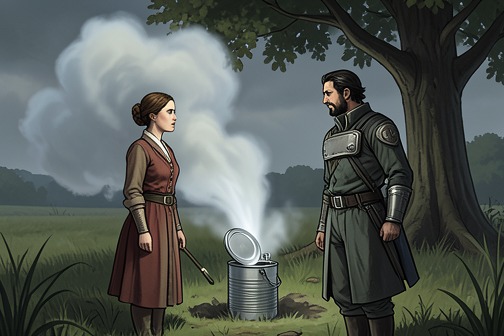
[The Bluebell Campground Showdown](entity:event-recall-event-229d626590cd) is the decisive defeat of the True Knot. Dan Torrance and Abra Stone use the group’s dependence on steam against it, releasing the lethal essence of [Concetta Reynolds](entity:character-recall-character-concetta-reynolds-71d47aef8eb8) and then confronting [Rose the Hat](entity:character-recall-character-rose-the-hat-b60da949127a) together. The encounter turns the True Knot’s defining source of endurance into the instrument of its destruction, while the surviving leader’s attempt to turn Dan and Abra’s connection against them makes their cooperation essential to the final outcome.
## Background: The True Knot’s dependence on steam
The group’s earlier rituals establish what is at stake at Bluebell. At the [Kozy Kampground](entity:location-recall-location-kozy-kampground-63f22e45380d), Rose arrives at the gathering carrying a canister, and the members respond with hungry anticipation. They recite their identity and creed together before Rose opens the canister and guides the released mist toward them. The group breathes it in; the process lasts five minutes, and some members swoon. Rose experiences renewed physical vitality and sharpened perception. The scene presents steam not as an incidental pleasure but as the substance on which the group’s apparent endurance depends.
That earlier feeding also sets up the reversal at Bluebell. There, the True Knot gathers to consume what it has taken; at the showdown, Dan makes the same appetite fatal. The group’s established practice explains why the red mist is a threat rather than simply a strange apparition. Its members have relied on absorbing steam, but the steam Dan releases is not a resource they can safely take in.
## Dan releases Concetta’s steam
The confrontation begins with the surviving True Knot members distracted by [Billy Freeman](entity:character-recall-character-billy-freeman-858124369582) performing a cartwheel in the parking lot. Their attention is turned away from the room’s entrance, allowing Dan to come in with Abra beside him. Dan registers the clothes on the floor and recognizes that [Bradley Trevor](entity:character-recall-character-bradley-trevor-7643b8abb94c)’s measles remain active. The detail connects the group’s immediate vulnerability to the earlier infection that has already weakened it.
Dan then turns inward and opens the third of his mental lockboxes, the one he knows is leaky. From it, he exhales the last gasp Concetta gave him. As the mist leaves his body, he feels relief from the poison that had remained inside him. Abra recognizes the released presence as her great-grandmother and cries out to her. The appearance is brief: Concetta’s face seems young within the mist, and she may look toward Abra before the cloud moves on. The moment gives the attack a personal dimension. Dan has not merely found a weapon; he has released the substance Concetta entrusted to him, and Abra responds to it as the presence of someone she loves.
The cloud rolls toward the clustered True Knot. Dan identifies it to them as steam and tells them that the substance they had lived on will now destroy them. The effect is rapid: the already weakened members begin to cycle, and within seconds many vanish, leaving their clothes behind. One pair, Short Eddie and Big Mo, embrace; Dan sees Short Eddie silently express love and Big Mo begin to answer before both disappear. Even as the attack succeeds, that brief gesture interrupts the clean division between victim and monster. Dan is moved by their affection, though he does not lose sight of the danger or the need to finish the fight.
## Rose survives and turns on their connection
Rose is at the head of the platform steps when the mist reaches the group. She is overwhelmed by the dying members’ cries and by the scale of the loss. For a moment she is the only one left. Rather than treating the survivors’ defeat as the end, Rose recognizes that she has learned how Dan and Abra carried out the slaughter. She also understands that their psychic connection might be used against them. Her response makes the final conflict more than a contest of force: she tries to turn the means of their successful cooperation into a vulnerability.
At the lookout, Dan and Abra’s struggle with Rose crosses mental and physical boundaries. Rose attempts to maintain her concentration while Dan appears in her thoughts; an interruption breaks her focus, and Abra returns to the confrontation. Rose tries to separate their actions and prevent them from working together, but the two coordinate their pressure on her. [Billy Freeman’s pickup truck](entity:object-recall-object-billy-freeman-s-pickup-0140e7b6d46d) strikes the base of the lookout and knocks Rose off her feet. The impact does not end the encounter. Rose remains an active threat, and she continues trying to resist the pair’s combined effort.
A shout from Andi Steiner—insisting that her father knew nothing—breaks into Rose’s awareness shortly before Billy’s truck hits. The detail offers a glimpse of the conflict beyond the immediate struggle and of the personal histories caught up in the True Knot’s collapse. Rose’s own thoughts turn toward using rage and childhood memories against her opponents, but her plan cannot restore the group’s support or undo the effect of the mist.
## Rose’s defeat and the aftermath
Rose finally faces Dan and Abra together at the railing. An unseen-seeming interruption briefly breaks her concentration, giving Abra the chance to reappear. The two press their advantage as a team, and Rose cannot regain control of the situation. She falls from the lookout and begins to cycle. Dan holds Abra’s hand as they watch; Abra asks whether Rose is in pain and expresses hope that she is. Rose’s death ends the immediate threat, following the destruction of the group she led.
The ending contrasts the True Knot’s collective feeding with the fellowship Dan later experiences in recovery. At a Saturday noon [Alcoholics Anonymous](entity:organization-recall-organization-alcoholics-anony-6880f11c6939) meeting in [Frazier](entity:location-recall-location-frazier-580ef5d80d16), members gather for his fifteenth sobriety anniversary. [Casey Kingsley](entity:character-recall-character-casey-kingsley-14db1e2199c9) gives Dan his medallion and embraces him, and Dan remains at the front of the room holding it while the group waits for him to speak. This later scene does not belong to the fight itself, but it places the victory within the wider arc of Dan’s life: the man who opened the lockbox and released Concetta’s steam has also sustained fifteen years of sobriety, supported by a community built around shared responsibility rather than predation.
The showdown’s central reversal is therefore both practical and moral. The True Knot’s ritual of taking nourishment and enduring is turned against its members; the group’s long dependence becomes fatal when it encounters tainted steam. Rose’s last strategy also fails because the bond she hopes to exploit allows Dan and Abra to act together. The destruction of the group closes the danger it posed, while Dan’s later anniversary meeting shows a different kind of endurance—one measured not by consuming others, but by surviving through mutual support.
Event 38
Dan Torrance Confesses His Past at His Fifteenth-Sobriety Anniversary Meeting
At his fifteenth-sobriety anniversary meeting, Dan Torrance turns a public celebration into a confession he had long believed he would never make. With his sponsor [Casey Kingsley](entity:character-recall-character-casey-kingsley-14db1e2199c9) present, Dan tells the meeting that, shortly before he quit drinking, he stole money from a woman named [Deenie](entity:character-recall-character-deenie-d43d4f623e59) after finding her young son reaching for cocaine. The account gives concrete form to a wrong Dan had kept outside his formal recovery work, and makes the anniversary not simply a count of years sober but a moment of accountability before a community able to hear him without turning away.
## The anniversary meeting
The Saturday noon [Alcoholics Anonymous](entity:organization-recall-organization-alcoholics-anony-6880f11c6939) meeting in [Frazier](entity:location-recall-location-frazier-580ef5d80d16) was one of [New Hampshire](entity:location-recall-location-new-hampshire-5211f8695ec5)’s oldest, dating to 1946. On this occasion it was filled to standing room because the meeting would end with pizza and sheet cake: Dan was celebrating fifteen years of sobriety. He was known to many there as Doc, a nickname that felt ironic to him because it was also what his parents had called him. Yet the name had acquired a new meaning through his work at the local hospice, where he cared for people nearing death.
A real doctor named John chaired the meeting at Dan’s request. Its ordinary business unfolded around him: members shared stories, the group passed its contribution basket, announcements were made, and chips were given to people marking stretches of sobriety. These familiar proceedings establish the community into which Dan is about to speak. His milestone is recognized within a gathering where people bring failure and recovery into the open, rather than presenting sobriety as a private achievement.
When John called Dan and Casey forward, Casey walked with a cane. He received the medallion marked XV and held it up for the crowd. His joke that Dan had once been an “asshole with attitude” drew dutiful laughter, but Dan’s heart was beating hard. He had to keep himself from fainting and feared he might lose his courage—or his breakfast—before the speech. Casey shortened his remarks, praised Dan for getting well, and passed him the medallion. When it threatened to slip from Dan’s cold fingers, Casey closed Dan’s hand around it, then pulled him into a massive hug and whispered, “Another year, you sonofabitch. Congratulations.”
## The wrong he had not told
Left alone at the front, Dan gripped the medallion while the assembled members waited for him to offer the experience, strength, and hope associated with long sobriety. He began by recalling a coffee with Casey a couple of years earlier. Casey had asked whether Dan had completed the Fifth Step: “Admitted to God, ourselves, and another human being the exact nature of our wrongs.” Dan had answered that he had done most of it. Now he explains that Casey suspected there was one wrong he could not get past because he was too ashamed to talk about it.
Dan admits he had not disclosed it. Casey warned that keeping the secret could eventually lead him back to drinking, and Dan now accepts the risk in that warning: if he starts drinking again, he says, he will die. He also says he has a great deal to live for. His decision to speak is therefore neither a claim that the past has been resolved nor a simple performance of gratitude. He opens the door because he believes concealment endangers the life he has built.
The incident took place not long before Dan stopped drinking. He woke in the apartment of a woman he had picked up in a bar. The apartment was a dump, and both of them had almost nothing. Dan identifies the bottle as a force that takes what a person has, first a little and then everything. He remembers the woman’s name—Deenie—even though he remembers little else about her. As he dressed to leave, he went through her wallet and took her money.
Then he saw Deenie’s son, still in diapers. Cocaine bought the night before remained on the table, and the child reached for it, believing it was candy. Dan took the cocaine away and put it somewhere the child could not get it. He presents that intervention as a real but insufficient act: he prevented the child from reaching the drugs, but still pocketed Deenie’s money and walked out. He says he would do anything to take that back, while acknowledging that he cannot.
## Speaking before the group
Dan’s confession refuses both self-exoneration and the claim that the protective act cancels the theft. He does not make himself innocent by describing what he did for the child; he names that action as “not enough” and keeps the injury to Deenie in view. At the same time, he does not conceal the one thing he did right. The two facts remain side by side: he removed a danger from the child’s reach, then stole from the child’s mother.
As Dan looks at the roughly nine dozen people in the room, he realizes that his story does not revolt or even surprise them. Some have heard worse; some have done worse. The response does not undo his wrongdoing, but it changes what speaking it means. The group can hear the account without reducing Dan to it, offering the kind of witness his secrecy had made impossible. He ends with “Okay,” thanks them for listening, and lets the confession stand without asking the room to declare him forgiven.
Before applause begins, an oldtimer asks the traditional question, “How’d you do it, Doc?” Dan gives the customary answer: “One day at a time.” After fifteen years, the phrase carries more than the duration of his sobriety. The anniversary’s medallion, Casey’s embrace, and the members’ listening have brought Dan to the point of telling the truth about the past without pretending he can change it. The meeting marks endurance, but its decisive act is disclosure: the life he wants to keep living depends on no longer treating this particular memory as untouchable.
Event 39
Fred Carlin’s Death
[Fred Carling](entity:character-recall-character-fred-carling-40224b72ec99)’s death brings Dan Torrance to the bedside of a man he had never particularly liked, and turns their shared history into a final act of care. In the Alan Shepard Suite at [Rivington House](entity:location-recall-location-rivington-house-367db3c227b9), Dan attends Fred as he approaches death, answers his unspoken request for help, and promises not to leave before he sleeps. The room’s recurrence connects Fred’s last hours with [Charlie Hayes](entity:character-recall-character-charlie-hayes-638aa7d439ef)’s earlier death there: for Dan, the work is not to cure or control the ending, but to accompany someone through it.
## Causes and Circumstances
Fred is taken to Rivington House after a traffic collision while going out for his evening cheeseburger. [Claudette Albertson](entity:character-recall-character-claudette-albertson-a11ccd1bfaca) explains that he habitually expected traffic to stop for him when he crossed Cranmore Avenue. The driver who struck him was reportedly so intoxicated that police took her to jail. The collision leaves Fred with life-threatening injuries, and the hospital staff stabilize him as best they can.
Getting him to a hospital is not immediately possible. A four-car pile-up on Route 119 in Castle Rock has created an emergency response bottleneck: ambulances and a medical flight are being sent to the many injured there. Claudette says an ambulance for Fred will come only after that situation is cleared, and she doubts he will still be alive by then. Her account makes the circumstances of his death starkly contingent. Fred is already in a hospital room, but the help that might make a difference is occupied elsewhere; the staff can ease the immediate crisis only so far.
The accident also interrupts a familiar routine. Fred is described as a junk-food regular whose second home is McDonald’s, and his trip across the avenue is for the meal he often goes to get. The ordinary purpose of the outing contrasts with the suddenness of the emergency. Dan knows Fred’s habits and recognizes the attitude Claudette describes, but familiarity does not make the situation less urgent.
## The Return to the Alan Shepard Suite
Dan’s response is shaped by his earlier encounter with Charlie Hayes in this same room. Charlie, ninety-one and close to death, had been frightened by the possibility that nothing awaited him afterward. Dan took his hand rather than attempt a futile pulse check, listened to his fear, and reassured him that people do not simply end. In that earlier vigil, Dan understood his presence at the bedside as the reason his own suffering had brought him there. Fred’s arrival in the Alan Shepard Suite makes that sense of purpose recur in altered circumstances.
There is a painful contrast in what Dan remembers. When Charlie died, Fred had been comfortable in his favorite chair, eating Junior Mints; Dan also recalls Fred’s unsympathetic response when told of Charlie’s death. Dan admits that he never cared for Fred. Yet he does not use this old resentment to withdraw care. The return to the room instead turns the earlier imbalance into a chance to act differently: the man who once seemed untouched by Charlie’s passing is now the one facing death, and Dan stays with him.
Fred lies in the room with [Azzie](entity:character-recall-character-d00229cfef28) curled at the foot of the bed. His condition makes ordinary conversation difficult. Dan asks whether he can hear and whether he is in pain, then takes Fred’s hand so that he can receive answers without requiring him to speak. Fred communicates that the pain is not so bad, but that he is scared. Dan’s attention to these brief responses gives the encounter its shape: he asks, listens, and answers what Fred is able to convey.
## Dan’s Final Act of Care
Fred asks Dan for help, and Dan recognizes the request without making the dying man explain it aloud. He understands this bedside work as his sacrament, the task for which he is made. Rather than promise recovery or offer a complicated account of what comes after death, Dan gives Fred a simple path into rest. He tells him, “You only need to sleep.” When Fred’s fear turns toward being left alone, Dan answers, “I’m here. I’ll stay here until you sleep.”
The promise matters because Dan makes it concrete. He clasps Fred’s hand in both of his and smiles; he does not leave the room or reduce the moment to a clinical procedure. The phrase [“Until you sleep”](entity:expression-recall-expression-until-you-sleep-6d91475d741b) closes the exchange and defines what he offers: presence through the transition, not a claim to reverse it. The narration places this vigil in a quiet Rivington House, where Dan senses that Fred has come to the border. His work is to stay beside him there.
## Significance and Aftermath
Fred’s death completes a pattern in Dan’s work with the dying. His care for Charlie had shown him listening to a patient’s fear and meeting it with reassurance; later, beside Concetta, he straightened her displaced cannula, took her hand, and heard her affirm that she was ready. Fred’s case brings those elements together under more difficult personal circumstances. Dan and Fred have no tender friendship to draw upon, and Dan remembers reason to resent him, but neither fact prevents the act of attention Fred needs.
The episode also gives the idea of the wheel a human scale. Fred ends up in the very room where Charlie died, reversing their earlier positions: the man who had been comfortable after Charlie’s death now depends on someone else to remain at his bedside. Dan recognizes the return of events, but does not treat it as a verdict or an occasion for payback. Instead, the recurrence becomes an opportunity to offer what he once offered Charlie: a steady hand, an answer to fear, and company until sleep.